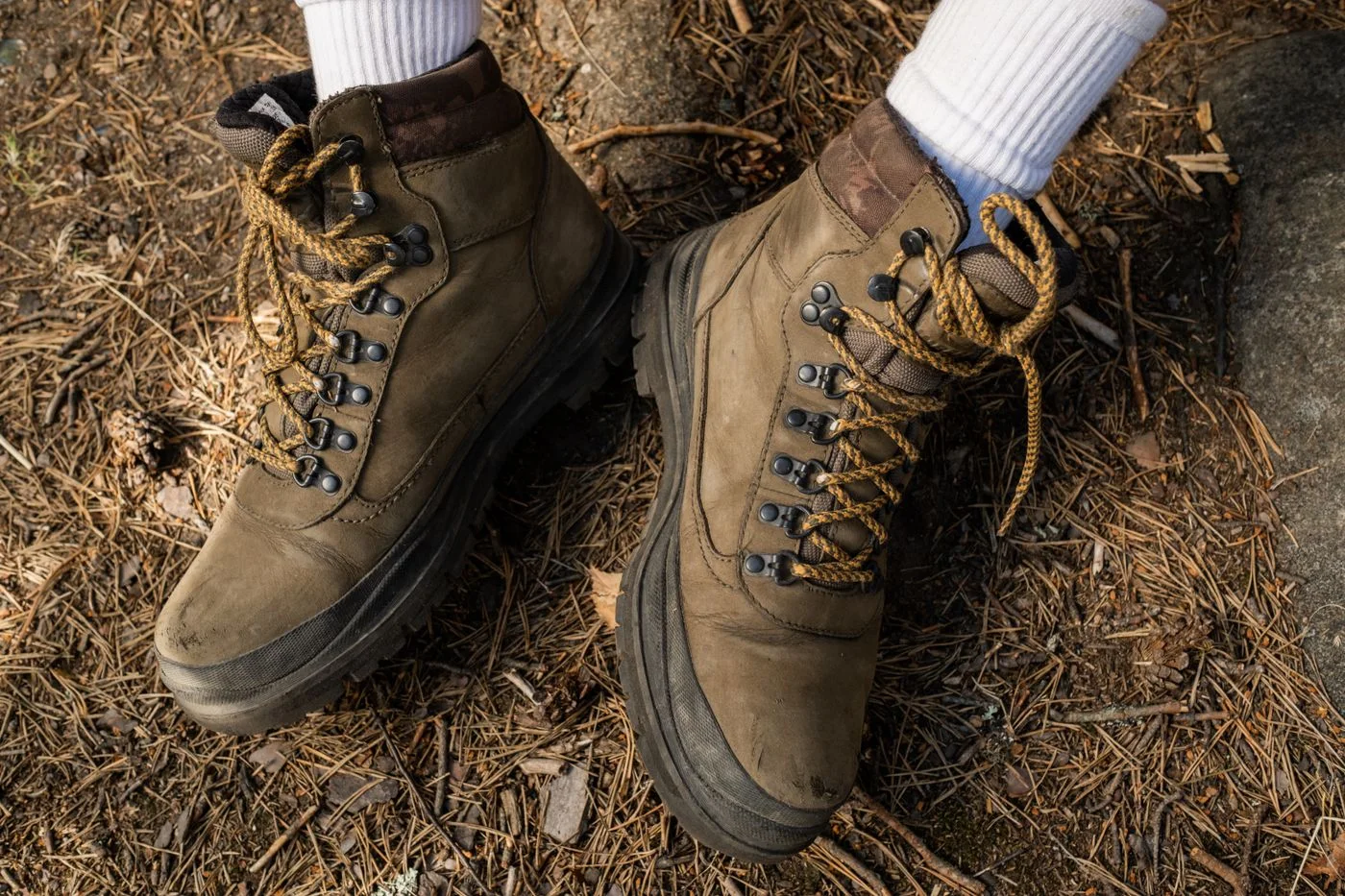
After the final autumn outing, your boots may disappear from view for a while. Decide deliberately where to keep them. A difficult-to-reach box beneath other belongings makes later checking awkward. An orderly location shows which pair is prepared and which still needs care or repair.
Prepare the pair for storage first
Do not store footwear immediately after a damp walk. Follow the model's cleaning and drying instructions first. Remember removed insoles and laces: if drying separately, they need an assigned place afterwards.
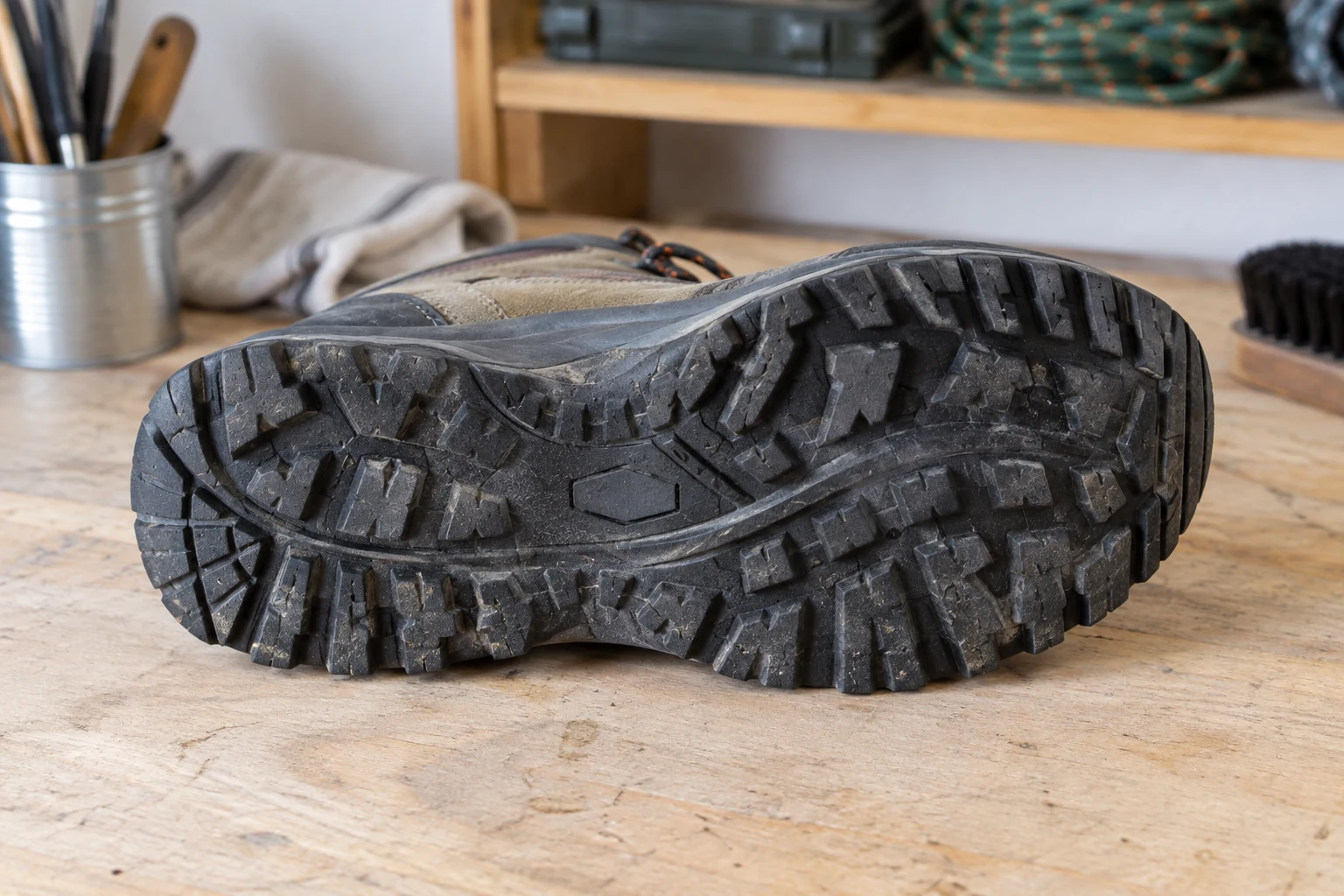
Before storing, inspect folds and sole edges for remaining dirt. A lingering stain does not automatically need intensive treatment. Know the actual condition and avoid hiding unfinished jobs inside a box. Add a short note when repair is planned.
If several pairs share the space, distinguish their condition. Clean summer shoes and today's damp boots should not simply be packaged tightly together. A drying area and a storage place may be separate locations.
Choose the location from the guidance
HANWAG specifies upright storage in a dry, dark and well-aired place for its footwear. Check your model's instructions and assess the available location accordingly. A regularly damp cellar is not suitable merely because other sports equipment already lives there.
Position the pair so heavy belongings do not continually compress the uppers. Avoid using the shoes to hold loose objects that may become forgotten debris. Follow the maker's recommendations for shape-retaining supports; a randomly chosen tightly stretched insert is not automatically an improvement.
A bag or box can help organization but should suit the intended storage conditions. Packaging does not remove the need to consider moisture or external pressure. Reassess the space when its use changes or other objects are added.
Keep relevant information with the pair
Record model name and approximate purchase date if they might otherwise be lost. A box label is enough. Add any completed repair or the care product last used. These details assist a later enquiry without creating a rigid servicing schedule.
Keep spare laces and compatible accessories separately but clearly assigned. You then need not wonder at the next season whether a leftover lace pair belongs to these boots. Organization does not require a large collection of specialized containers.
Start again before the next outing
Bring the shoes out in time and inspect uppers, lacing components and visible sole construction. Storage does not stop time. LOWA notes aging in certain sole materials even with little use. A clean exterior therefore does not approve the next long route by itself.
Seek advice if anything unusual appears. If the pair looks sound and relevant inspection guidance is satisfied, begin after a long break with a short appropriate walk. The seasonal change becomes a deliberate restart rather than a surprising first outing far from home.