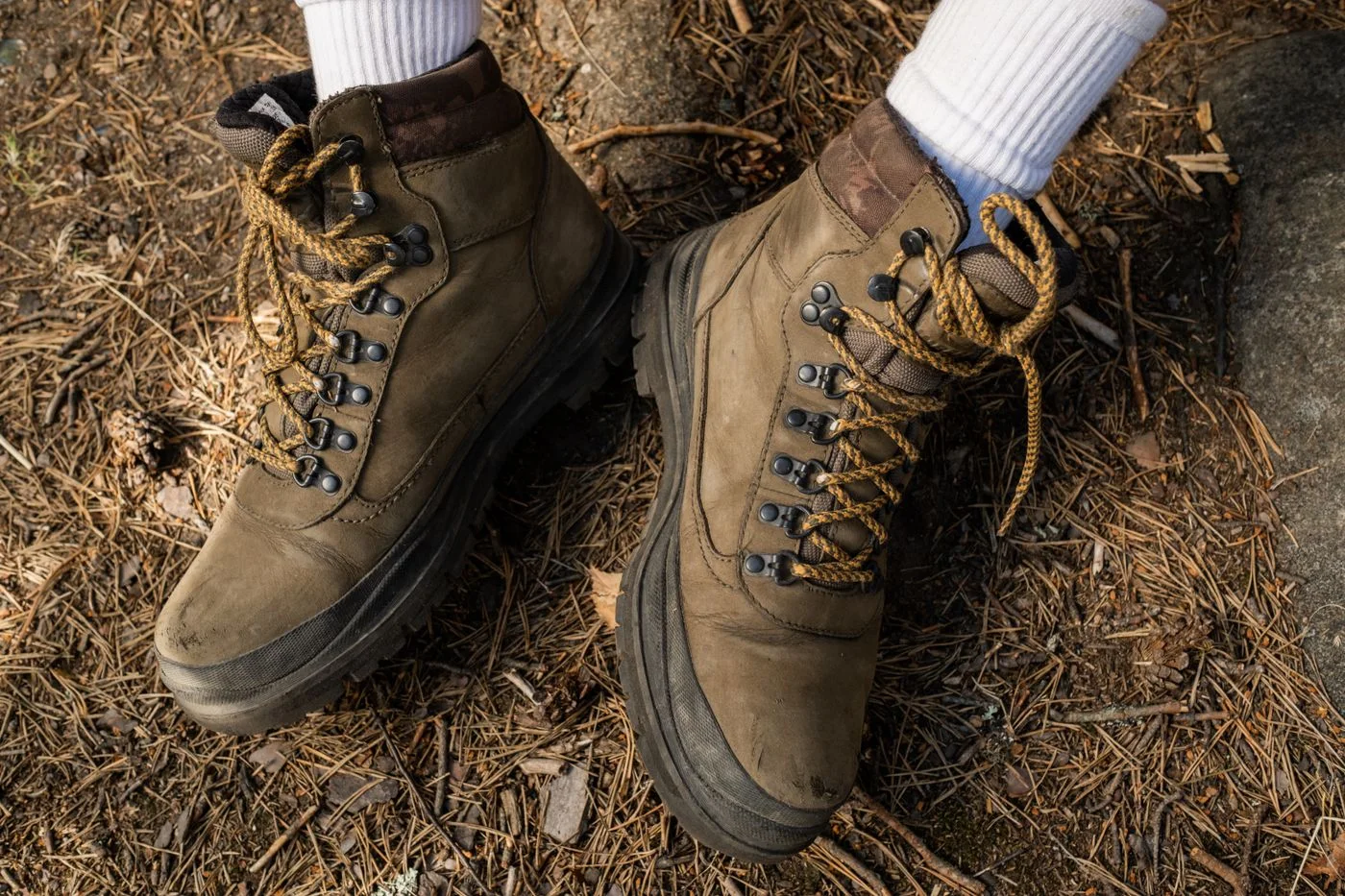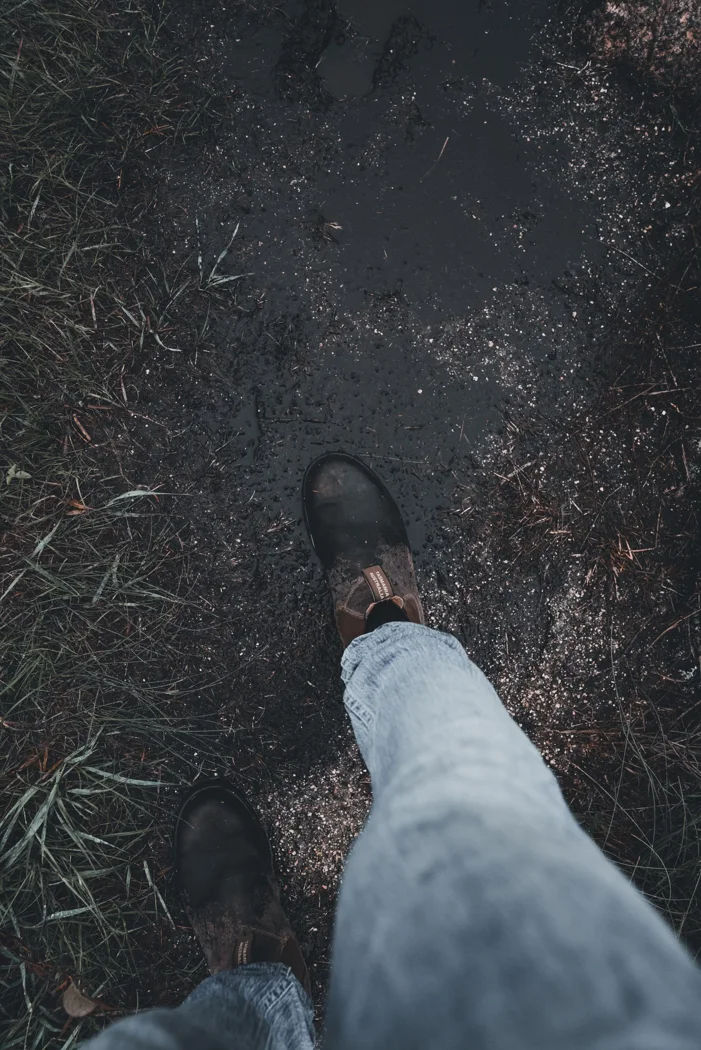
Turn a hiking shoe over before deciding from its side profile. Beneath it is the surface that will meet gravel, soil and stones. An impressive tread pattern is not a universal quality mark. It should suit the intended use, and its appearance alone cannot tell you how it will behave on every wet surface.
Describe what is visible first
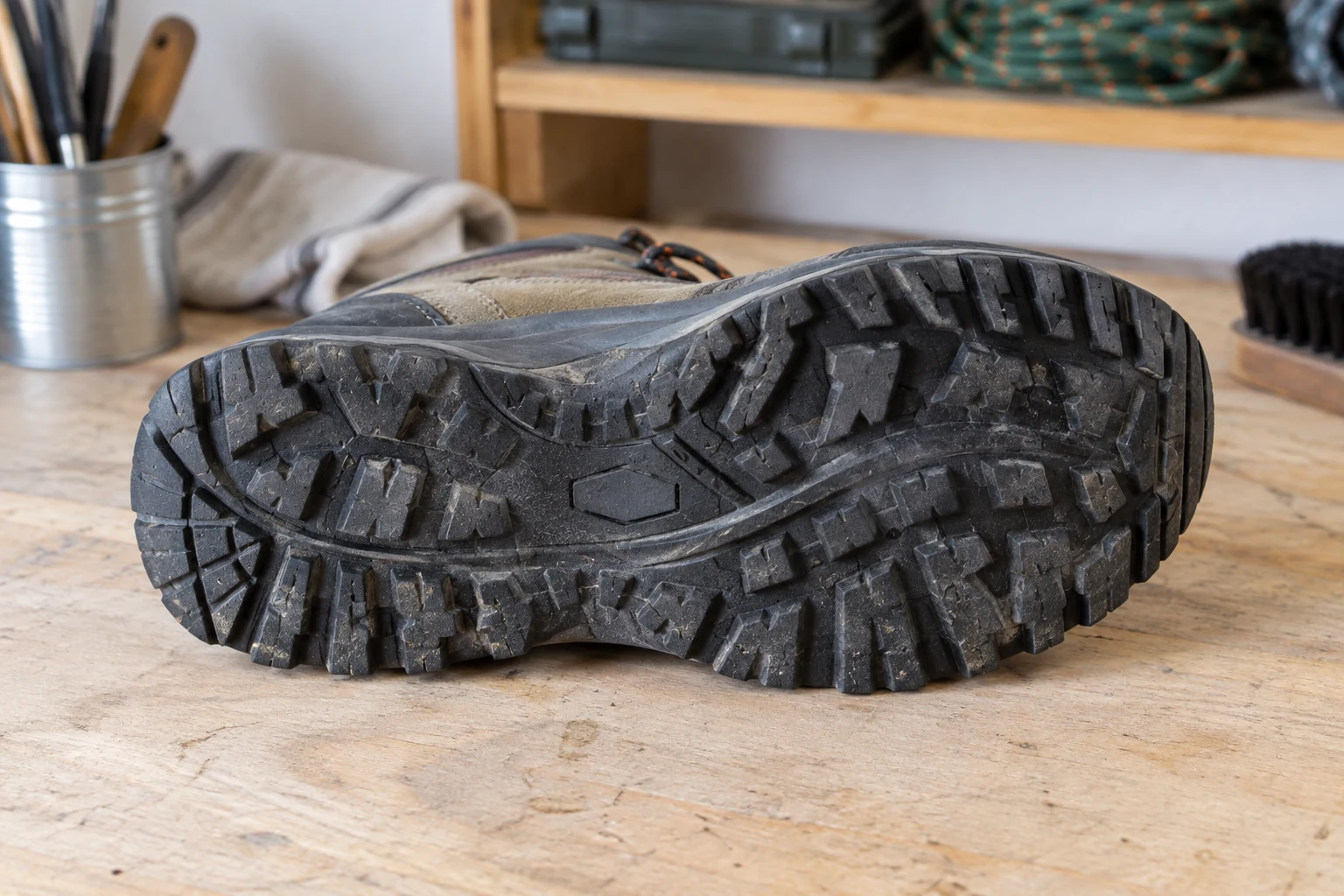
Look at the lugs and the spaces separating them. Are the raised sections clearly divided, or does the sole have larger continuous areas? Inspect the outer edge and heel too. Compare two candidates in the same size rather than judging their real dimensions from heavily enlarged product photographs.
Describe what you see without immediately ranking it. “Wider gaps” is an observation; “secure on every muddy path” would be an unsupported promise. Ask the shop about the specific model's intended use and how the manufacturer describes the complete sole construction. That includes layers you cannot inspect simply by turning the shoe over.
Use your regular paths as the reference. Someone covering frequent paved stretches will want a suitable walking feel there too. Someone following changing trail surfaces will ask different questions from a person choosing footwear mainly for a city park. A clear description of your walks is more helpful than searching for the most aggressive-looking tread.
Rubber compounds are not interchangeable
Vibram offers different rubber compounds with different intended applications; Idrogrip, for example, is described for wet outdoor environments. A brand logo beneath two shoes does not establish that both use the same compound or construction. Look for the exact outsole designation in the model information.
A manufacturer's description does not promise that every smooth root or tiled surface will provide firm footing. Water, dirt and the particular surface still matter. If a shoe slips during your actual walk, a familiar logo cannot cancel that experience. Adjust your movement and, when necessary, your route to the conditions you encounter.
A used pair adds the question of condition
With shoes you already own, notice where tread edges remain defined and where areas have become smooth. Compare left and right as well as heel and forefoot. Remove loose dirt so you can see the surface. Do not pull concealed sharp debris out carelessly with bare fingers.
Photograph unusual changes and seek a shop's assessment when wear is unclear. Visible lugs do not prove that the entire sole unit remains sound: separation or changes elsewhere in the shoe require their own inspection. The tread is a useful place to begin assessing footwear, but it cannot supply the whole answer.