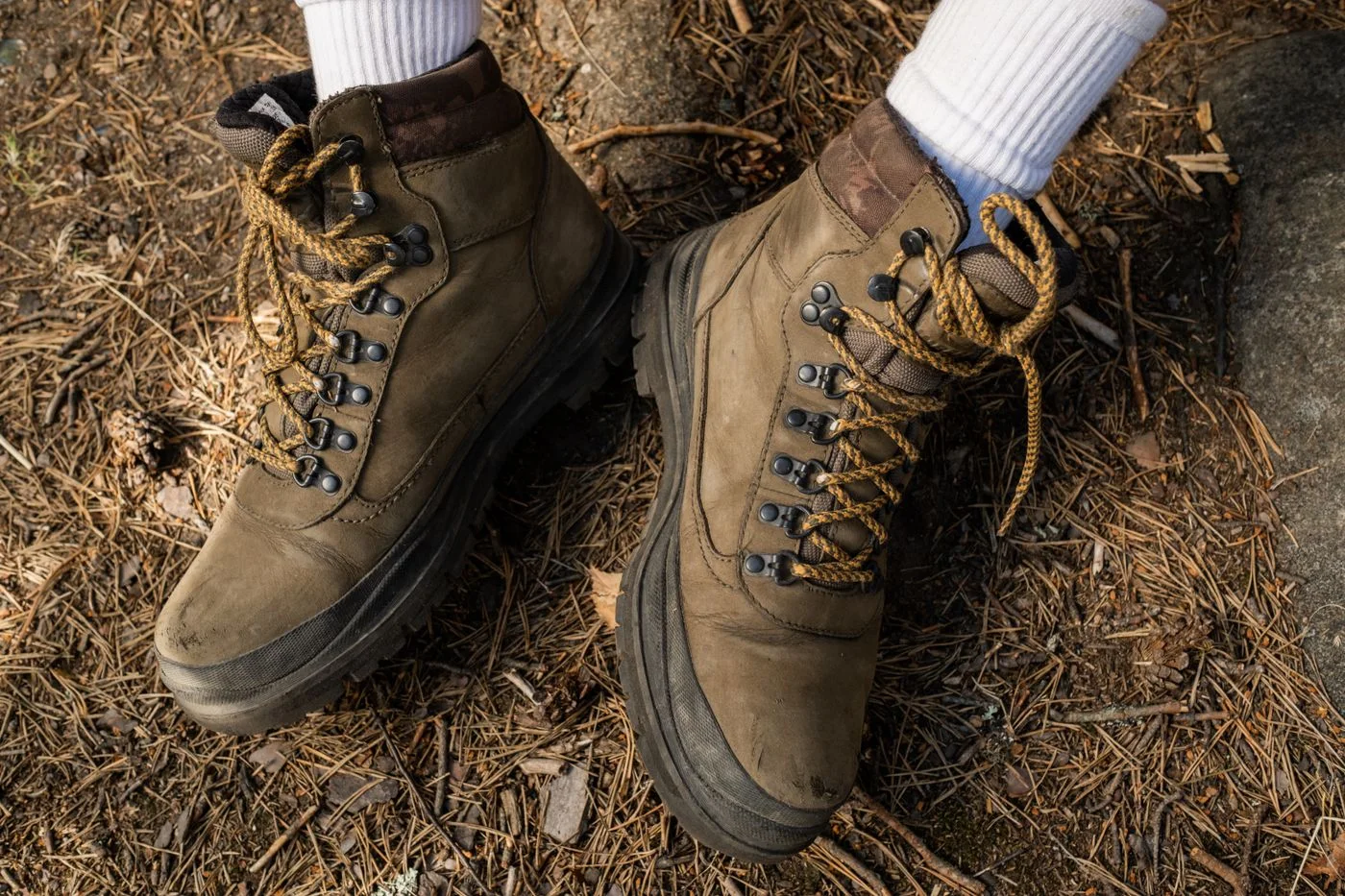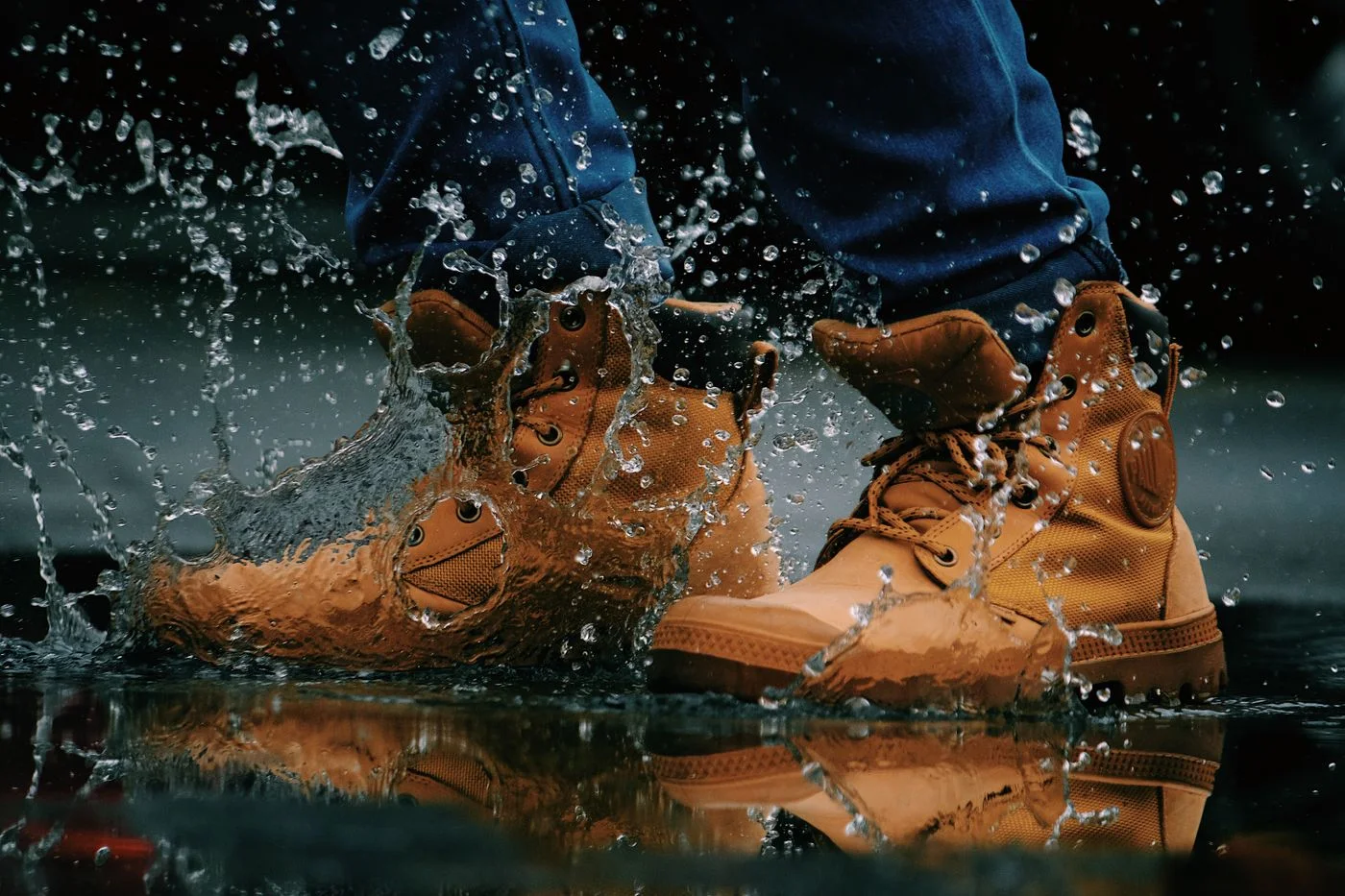
After a damp walk, the outside of a shoe looks darker than it used to. That may raise a care question, but it does not establish a failure of the waterproof construction within. Separate what you can see from what you experienced while wearing it. A wet upper and water inside the footwear are different observations.
Find the appropriate instructions first
GORE-TEX addresses restoring exterior water repellency separately in its footwear care instructions and also directs users to the shoe manufacturer's guidance. Start with the instructions for your model, then establish which treatment suits the upper and construction.
A product intended for smooth leather is not automatically appropriate for every fabric. A general outdoor-care label still needs a suitable stated application. Read both sides of the packaging before opening it. If instructions conflict, ask the manufacturer or retailer and postpone treatment.
Prepare the application
Avoid leaving care until immediately before departure. Cleaning, application and the product's specified drying period need their own time. Choose a suitable workspace and follow the application directions, including environmental requirements. Spray or excess treatment should not land accidentally on nearby belongings.
The condition required for application varies by product. Do not assume every shoe must be entirely dry or deliberately damp. The chosen treatment's instructions determine that. The same applies to quantity, application distance and removing excess. More product does not automatically produce better treatment.
If the model instructions require removing laces or removable components, prepare somewhere to keep them together. Refit them correctly after drying. A photograph of the original lace path can help if the arrangement was unfamiliar.
Assess the result sensibly
After the specified drying period, inspect the appearance and any visible residue. A small exterior water check permitted by the instructions differs from intentionally immersing the entire shoe. Immersion says little about whether routine care was appropriate, and water can enter through the opening.
Observe the pair on a normal short outing afterwards. If moisture still enters, record the circumstances and its apparent location. Repeated spraying should not obscure a possible leak. Seek an assessment before applying the same treatment again and again.
Record the date and product without inventing a rigid interval. When and how treatment is repeated depends on the particular product, footwear and use. Care should respond to observations rather than an arbitrary calendar appointment.