Remove and spread it out
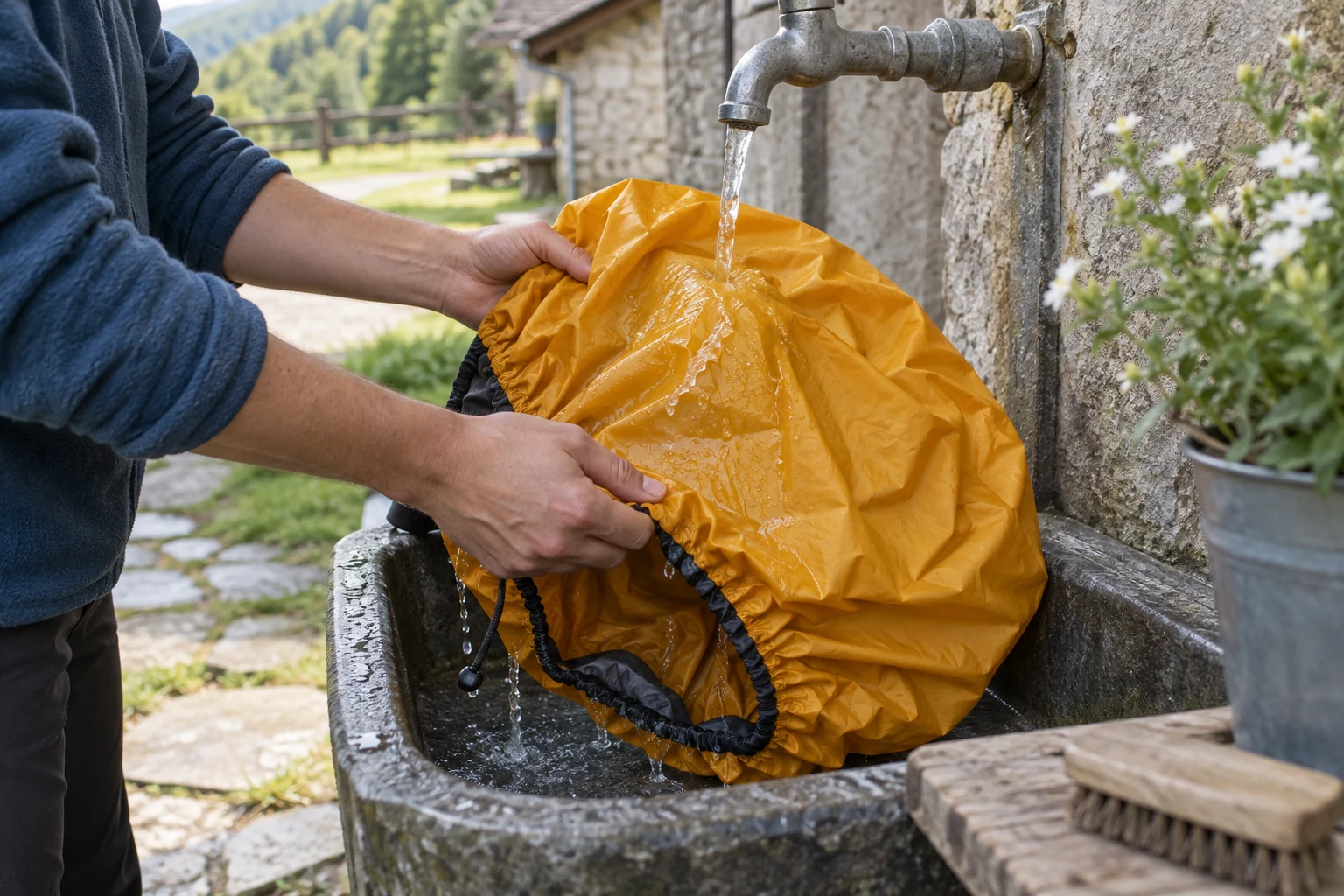
Take the cover off after the outing. First check its edge for soil and twigs. A rolled cover can retain moisture inside after the visible exterior feels dry. Spread it in a suitable place and open folds without forcefully stretching a coating.
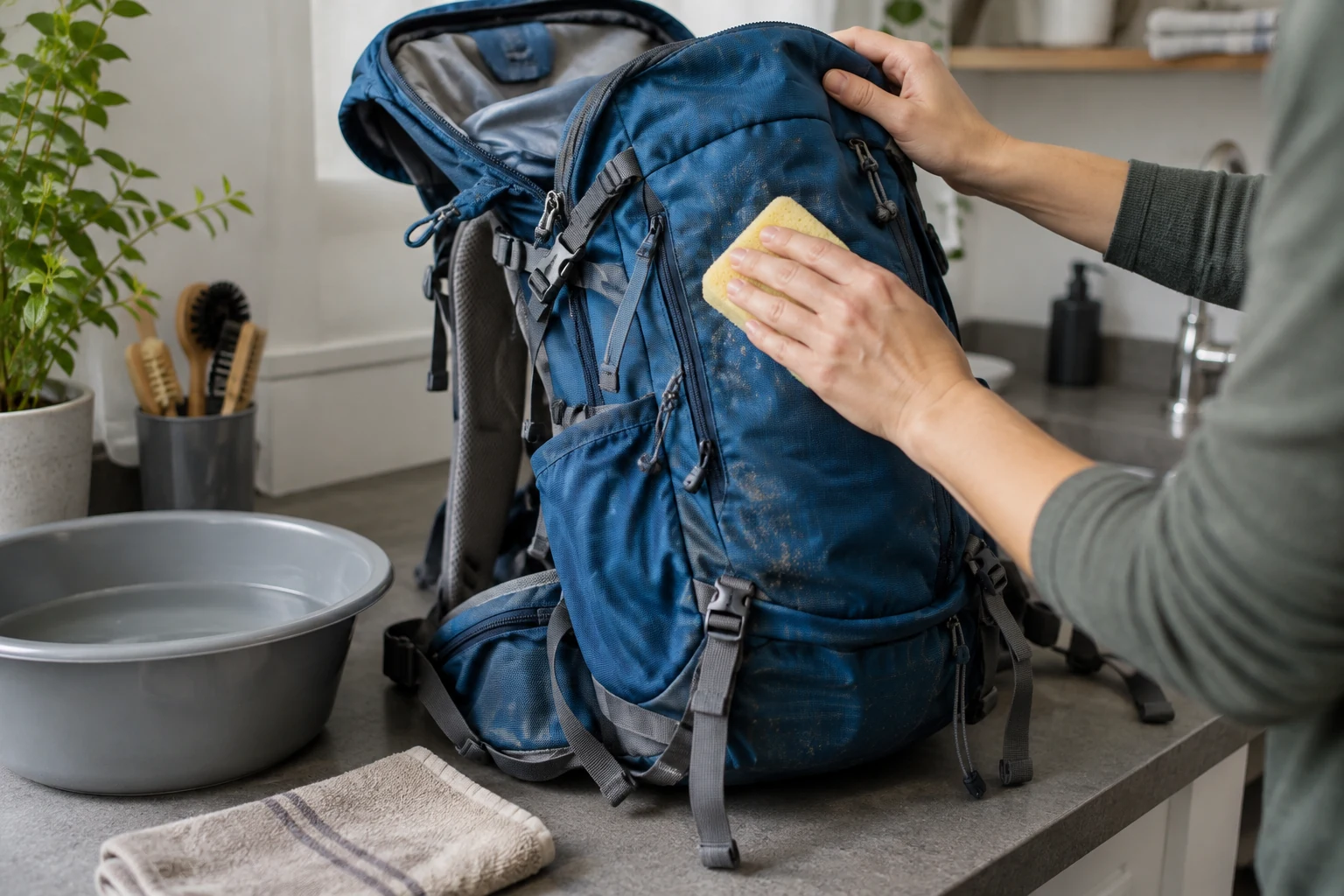
deuter advises wiping a used rain cover with a damp cloth and drying it thoroughly. Still consult your own cover's guidance. A thin coated construction does not automatically tolerate the same products as a pack's tougher exterior. Treat them as separate care components.
Clean the edge and contact areas
Remove loose dirt carefully, especially around the elastic hem, attachments, and areas that touch the ground when the pack is put down. A soft cloth handles many superficial marks. Use cleaner only where approved and remove residue as instructed.
Do not pull hard on a snagged elastic edge. Release the obstruction and check its position. A damaged fitting can let the cover move during later use. Cleaning does not repair a torn seam or worn retention point.
Dry open and inspect
Use ventilation rather than direct intense heat. A dryer is not an automatic shortcut. Turn the cover where needed so the inside and folded corners dry too. Wait until the whole item is dry before storing it, not only the first surface you touch.
Look at coating and seams. A sticky or detached layer needs a different assessment from a dirty mark. Do not automatically apply a general reproofing spray. A treatment that refreshes surface repellency does not repair a damaged barrier. Ask the maker about suitable options before assuming the same protection remains available.
Finally, return the dry cover to an accessible location. A neatly stored cover is only useful if its closure and retention points are still functional and you can find it promptly when needed.
Check the storage pouch separately before returning the cover. It may still be wet after the larger surface has dried. A clean cover placed into a damp pouch is not fully prepared for storage.