Remove the dry debris first
Empty every compartment after the outing, including lid pockets, hipbelt pockets, and small internal sections. Crumbs, sand, and forgotten packaging should not enter the washing water. Remove detachable belongings, but dismantle the suspension only where the instructions explicitly permit it. A frame is not automatically a removable laundry component.
Read the label and model guidance. deuter recommends hand cleaning its backpacks rather than machine washing. That is a useful instruction for those products, not a replacement for another maker's directions. Electrical components and special inserts may require separate treatment.
Treat light marks locally
Remove loose dry dirt with a soft brush or cloth. For minor splashes, localized cleaning with a damp cloth may be sufficient, as deuter describes. Work gently around seams, prints, and coated areas. A dark mark does not automatically require hard scrubbing.
Try an approved cleaner on an inconspicuous area first. Avoid unidentified stain treatments or solvents. Discolouration or a sticky coating caused by an aggressive chemical cannot reliably be reversed by additional rinsing. With unknown material, ask the maker rather than experimenting with several products.
When broader washing is needed
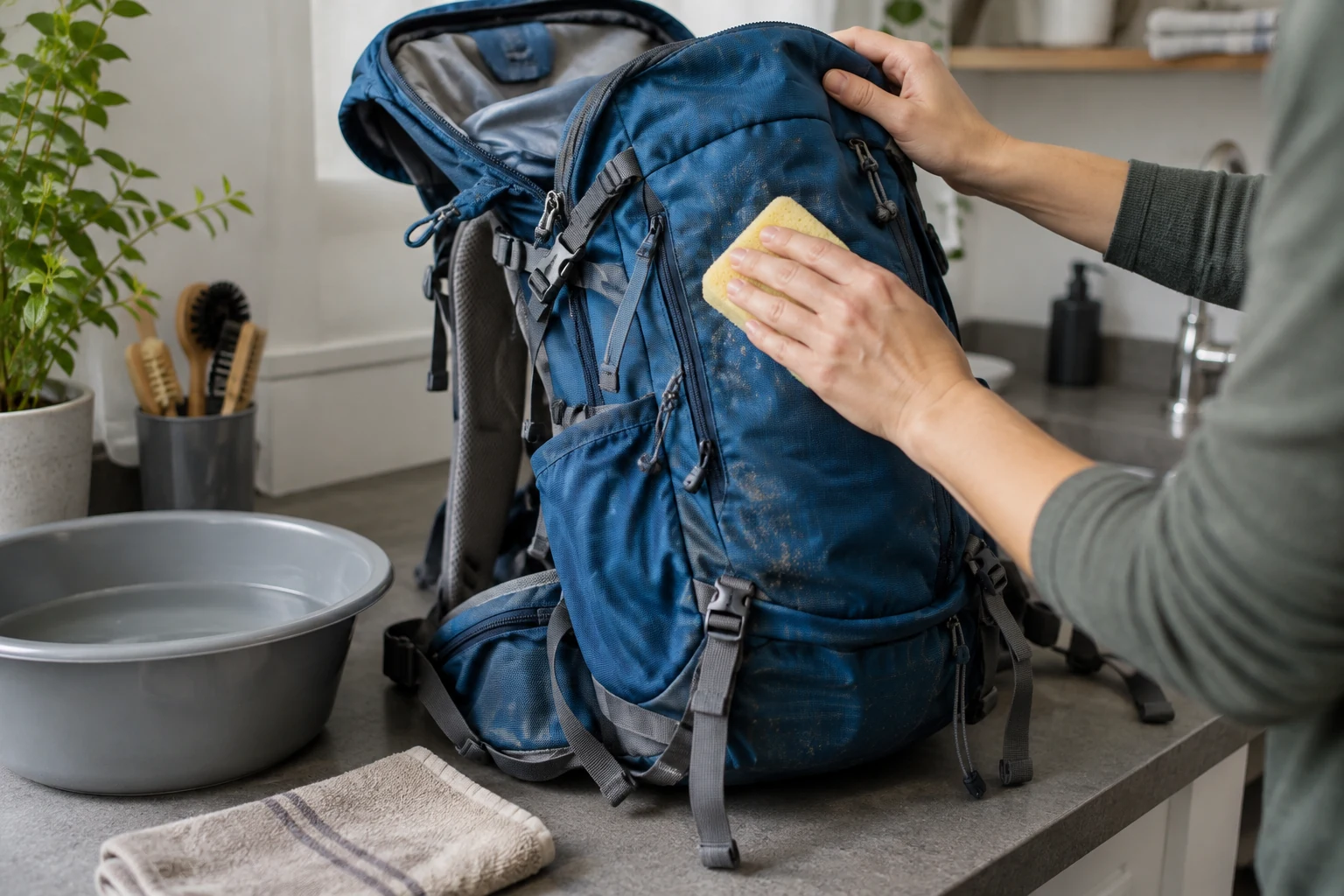
Prepare a suitably large clean basin or bath. Use the temperature and cleaner permitted by the instructions. Follow the dosage instead of treating heavy foam as proof of thoroughness. A pack does not need a household washing programme when its construction does not allow one.
Clean accessible dirty surfaces with a suitable soft tool. Shoulder and hip padding may need particular attention because of frequent contact with clothing and the body. Handle them as instructed and avoid twisting the whole pack forcefully. Padding, adhesive assemblies, and rigid parts do not behave like an ordinary towel.
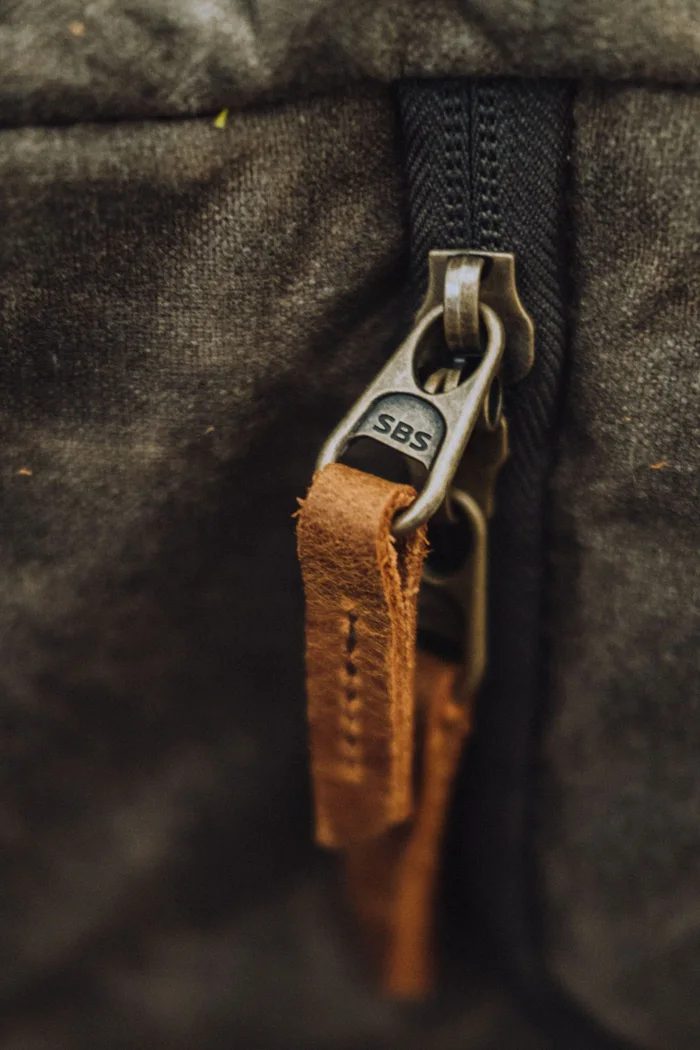
Remove obstructing particles from zips rather than forcing the slider through dirt. Look for trapped fabric and release the cause carefully. An oily household product is not universal zip maintenance; specialized closures have their own requirements.
Rinse throughout the construction
Remove the approved cleaner with fresh water. Pay attention to padding, folds, and pocket rims where residue may remain. Rinsing only the visible exterior misses those areas. A clean main compartment does little good when detergent remains inside a closed side pocket.
Allow water to drain without wringing the pack forcefully. Some makers allow particular actions on individual pads; do not transfer these automatically to every component. Check that pockets are open and water is not collecting in a corner.
Drying is a separate stage
Dry in a ventilated location as directed, away from direct heat. Hang or turn the pack only in ways that avoid stressing its structure and fittings. Open compartments sufficiently for hidden areas to receive air. Visible fabric may dry earlier than substantial padding.
Store only when interiors, strap ends, and pads have dried completely. Inspect coating, seams, and buckles at the same time. Washing removes dirt but does not repair a detached barrier or damaged seam. Those findings need a separate repair decision, rather than another round of increasingly forceful cleaning.