Empty everything at home
Remove all belongings after a wet outing, including from pockets you did not use. Take off the rain cover and spread it separately. Damp clothing and closed inner bags should not remain inside for days. Otherwise, the exterior may appear acceptable while moisture stays enclosed.
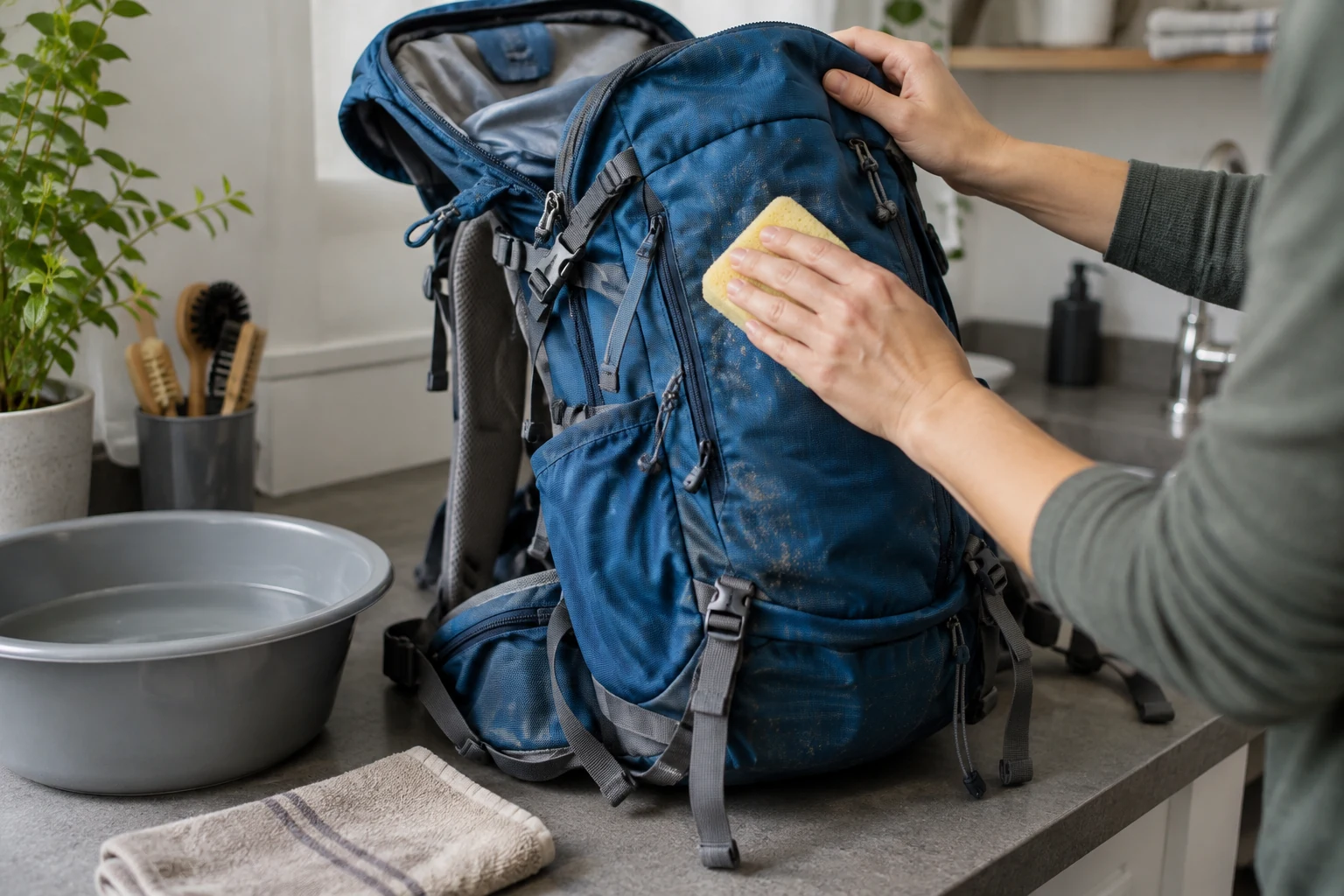
Separate removable inserts only where designed for that purpose. Remember their position and do not detach fixed seams or frame connections. A reservoir requires its own cleaning; its tube and valve do not dry simply because the backpack stands open on a chair.
Ventilate hidden areas
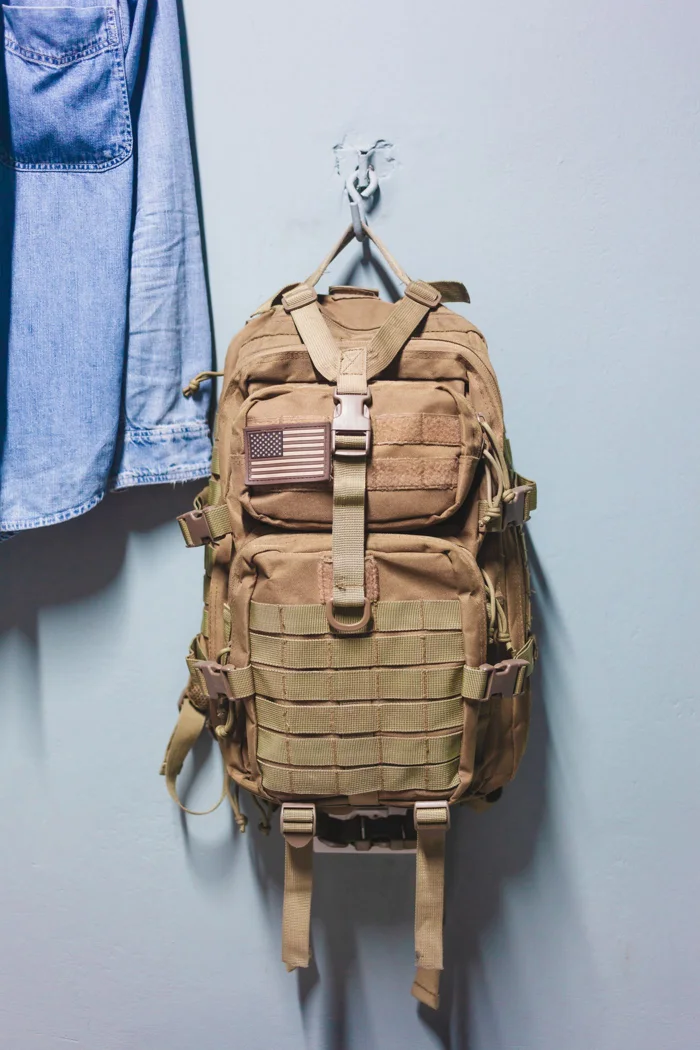
Choose an airy place and open the compartments. Follow hanging guidance; deuter advises gentle drying away from direct sun. One small loop should not support a pack still containing pooled water. Let water drain first and change position carefully where needed.
Unfold webbing without unthreading buckles unnecessarily. Examine the bottom, lower side pockets, and substantial padding. They may dry differently from thin front fabric. A fixed assumption that everything dries overnight cannot account for moisture, temperature, and construction.
Avoid shortcuts through strong heat
Do not place the pack on a radiator or beside an intense heat source unless approved. Heat affects materials and bonded components differently from air drying. A household dryer is not an automatic alternative either. Tough outer fabric does not establish the heat tolerance of every part.
If you need the bag soon, identify exactly which areas remain damp. Preparing a dry liner does not justify prolonged closed storage of a wet backpack. Arrange the next load only after assessing the components individually.
Store it loosely and cleanly
Keep the dry pack unloaded where possible, without permanently compressing it under heavy objects. A clean dry location is more useful than a sealed container holding uncertain residual moisture. Check again for small forgotten items and food remnants.
Treat persistent odour, sticky coating, or detached seam tape as a separate issue. Further drying does not automatically repair those changes. Consult the maker's care or service instructions when the condition remains unclear. The routine ends with a checked dry pack, rather than merely moving it out of sight.