Switch off and identify the construction
Put the lamp in its intended off state. Disconnect power only as permitted; an integrated battery should not be pried out for cleaning. Identify the model and battery type before applying a general removal recommendation.
Petzl's instructions specify different compatible cells and rechargeable packs. Begin with that identification and keep the model reference accessible. A similar-looking lamp may use another battery or compartment construction.
Separate housing and headband care
Wipe accessible dirty exterior surfaces with the permitted cloth method. Keep hard tools away from the lens and sealing surfaces. Examine hinges and tilt adjustments for grit. Do not force a lamp head past a particle obstructing movement.
The band may tolerate cleaning methods unsuitable for the electronics. Remove it only where approved and note its threading route. Let a washed band dry completely. Twisted rethreading changes fit even when the lamp itself remains clean.
After damp use
Inspect housing, compartment cover, and accessible seals. Open an approved battery compartment in a clean location to avoid introducing dirt. Follow the model's drying procedure. Permission for rain exposure does not automatically cover an open compartment or charging port.
Distinguish ingress or changed function from a damp exterior. Follow support guidance rather than charging an obviously wet or damaged system experimentally. Strong heat is not an appropriate improvised method for drying internal electronics.
Batteries and contacts
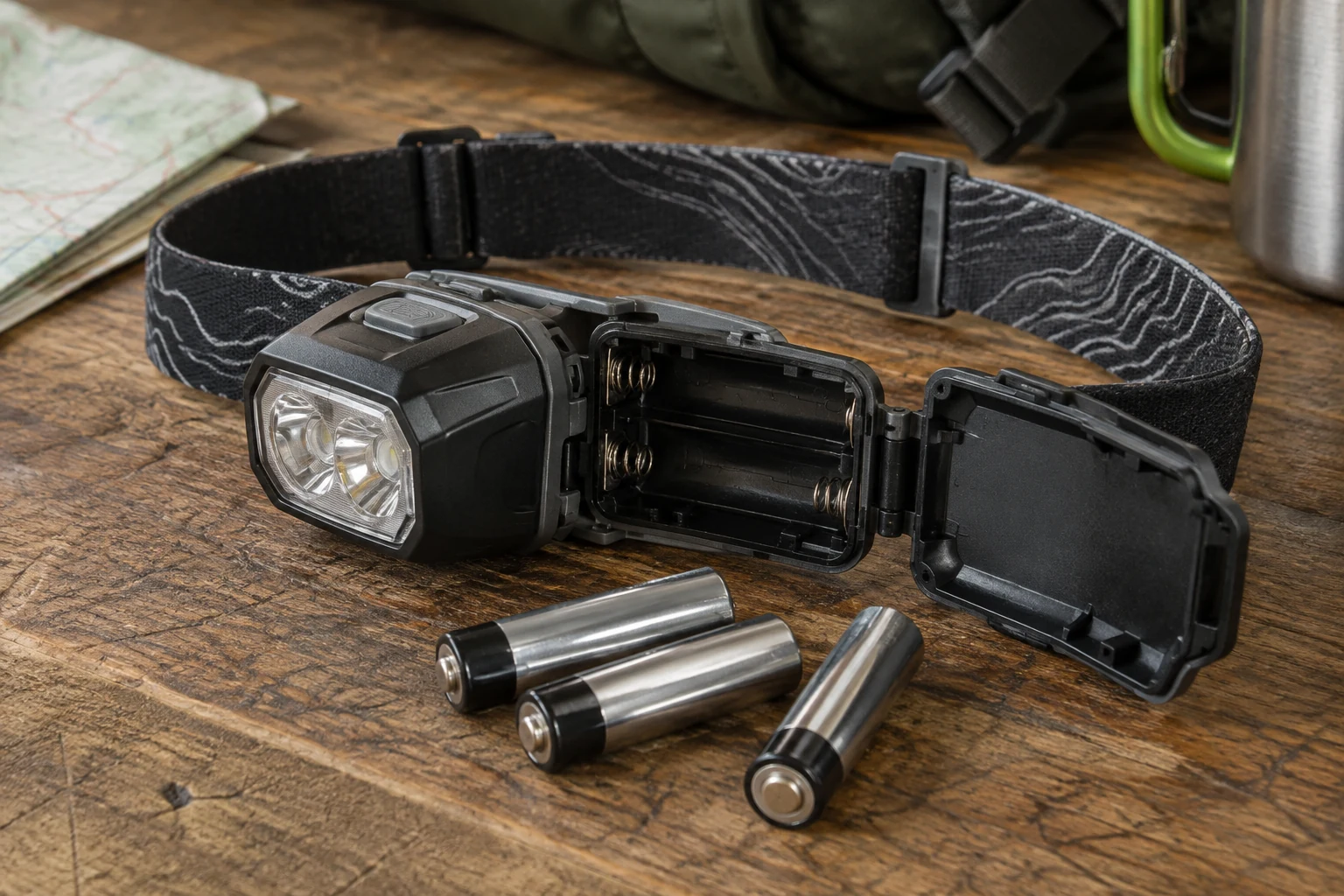
Use only the specified power source with correct polarity. Do not mix new and used cells or different types where prohibited. Inspect visible contacts. A leaking cell and corrosion require a different response from ordinary exterior wiping.
Avoid random scraping with metal tools. Even when an instruction describes a particular contact treatment, first identify the correct device and procedure. Uncertain corrosion or damage belongs with manufacturer support rather than an unintended electrical repair.
Storage and reuse
Long storage may require removing replaceable cells or checking rechargeable batteries at specified intervals. Follow the actual instructions instead of a universal charge percentage or calendar rule. Store dry and prevent accidental activation, using an intended lock where advised.
Reassemble correctly and perform a short function check before the next walk. Assess modes, switching, and band retention. A working light does not establish every possible runtime, but can expose obvious operating or assembly errors. Care is complete when the device is clean, dry, and prepared in a way you understand. Keep disconnected batteries appropriately separated rather than loose among metal accessories.