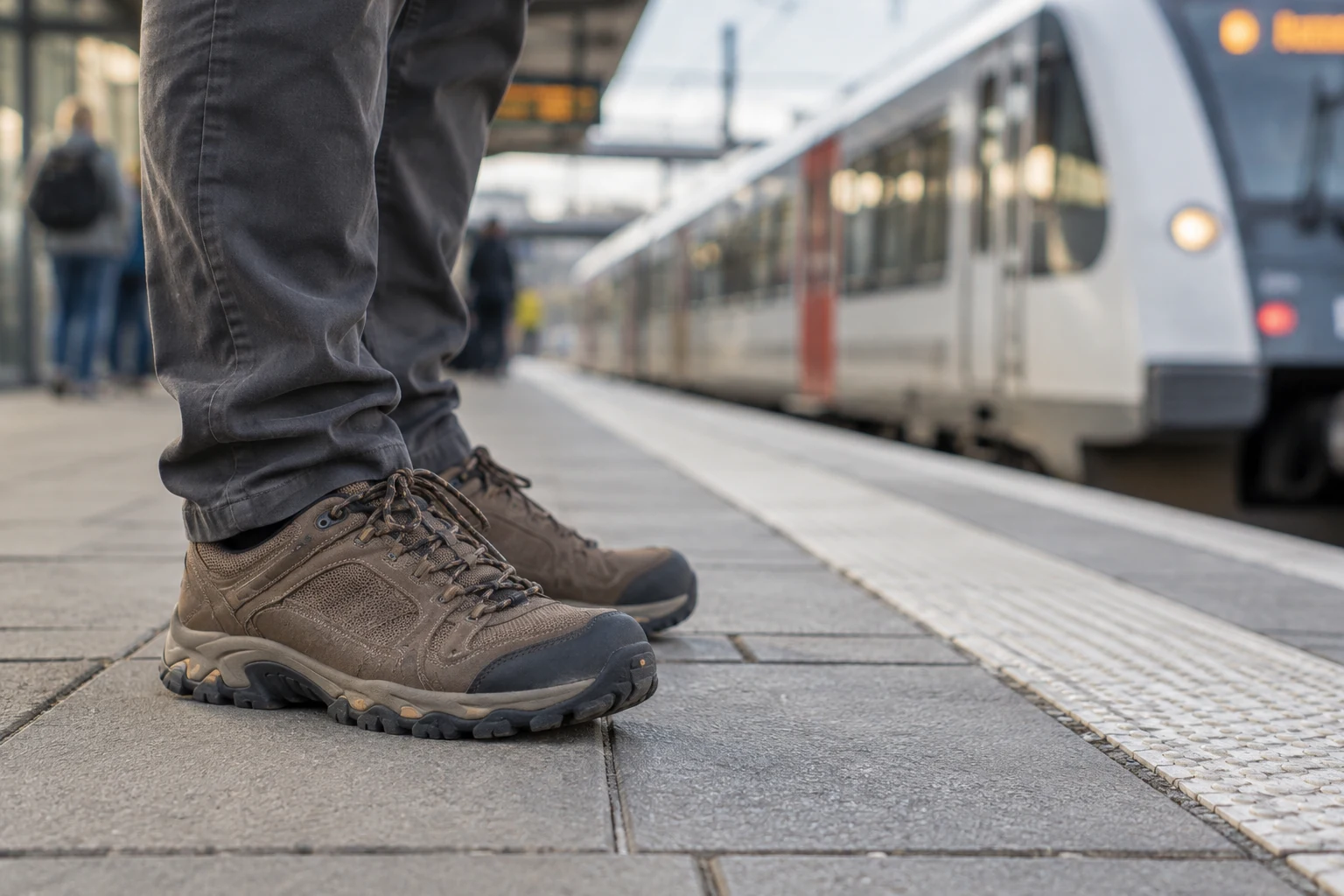
Leaving the train, you cross the village before field tracks lead into woodland. Walking without a car often means wearing one pair over several surfaces. Choosing only for the most scenic stretch is therefore incomplete. Equally, the easy station approach should not obscure a more demanding section later.
Identify the transitions
Check the map and description for the connection between station and walking path. Are there long surfaced stretches, steps or an alternative approach? A route described as a hike may include more village walking than expected. This helps determine which existing pair to use.
Plan the return connection too. Another destination station may involve a different surface or longer street section. A tight timetable should not pressure you to hurry over unsuitable ground. Footwear selection and scheduling are separate tasks that need to work together.
Compare for the complete journey
HANWAG's application categories distinguish footwear for maintained paths from designs for rougher ground. Such information helps with shortlisting but does not establish how a specific pair will fit your foot across every section.
If shopping, describe the mixed route explicitly. Compare level walking with the available appropriate fitting surfaces. Seek a coherent combination rather than a compromise that only half suits every surface. For substantially different outings, different existing pairs may remain the better arrangement.
Consider others during the rail journey. Keep dirty shoes off seats. If carrying another pair for a long return trip, plan a separate place for the used footwear. The additional luggage should serve this particular purpose.
Keep the transitions manageable
Remove loosely attached dirt somewhere appropriate before boarding, without blocking access. Tidy large loops and loose lace ends. Preparation belongs before the route rather than turning the train journey into a complete new lacing experiment.
On returning home, inspect and care for the pair as after any walk. Record the actual surfaces on unfamiliar routes. The next trip from the same station then starts from better information than a general label describing a rail-based hike.