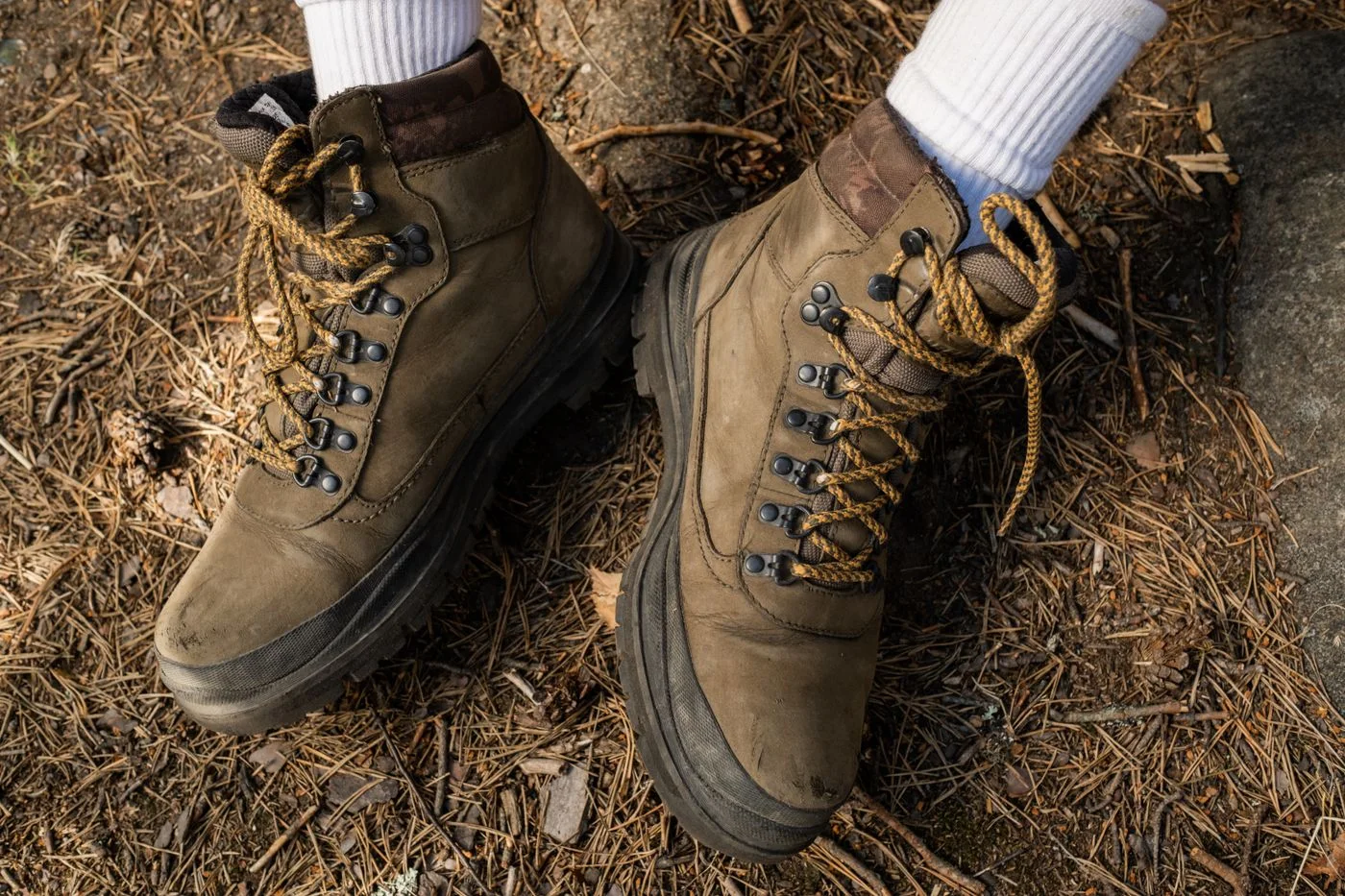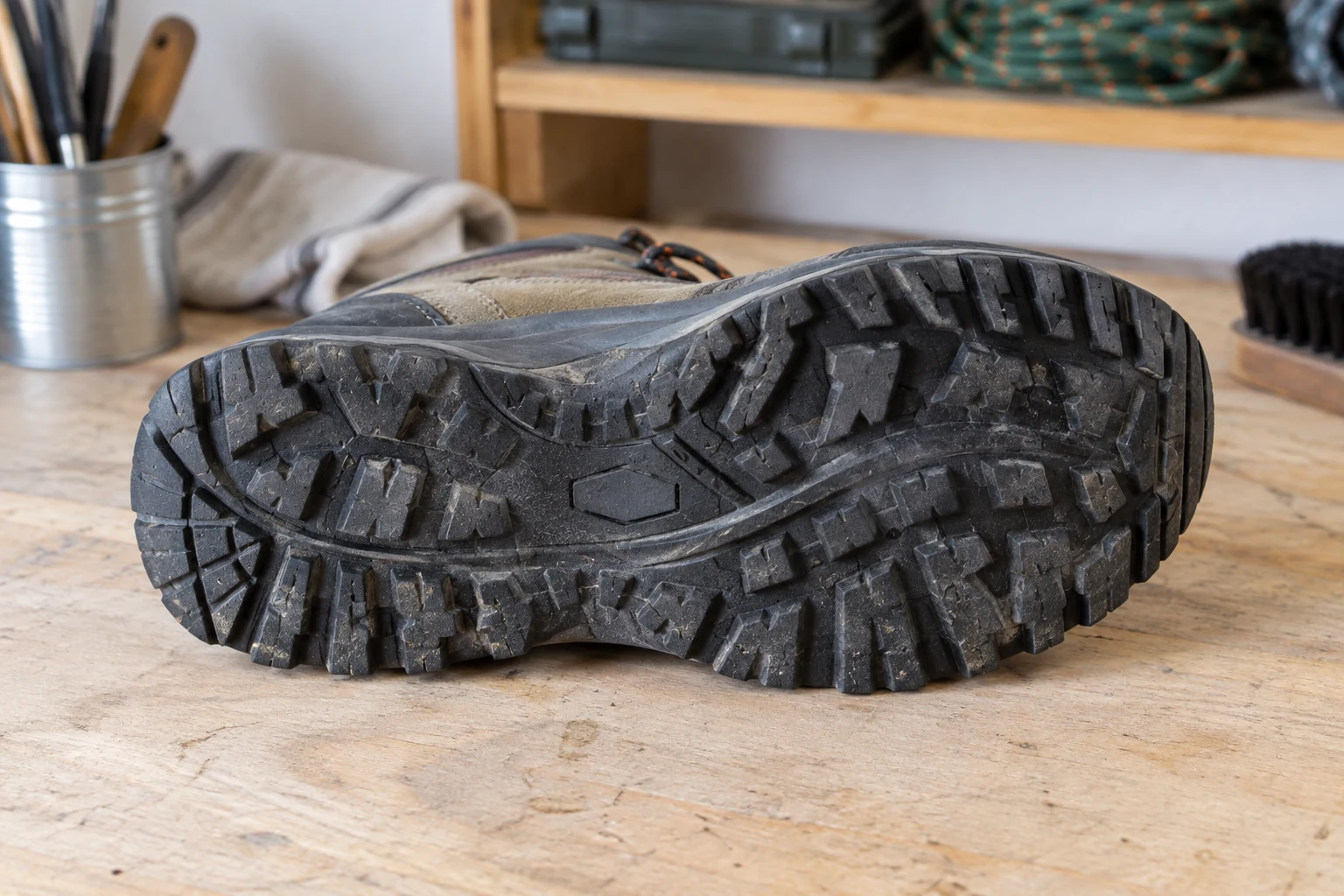
A walking shoe can look like one object while combining several exterior materials. Textured leather, fabric inserts, a rubber rand and lacing components do not necessarily need the same care. Avoid starting with an arbitrary tube from the shoe cupboard. Find the model name and its instructions; color alone does not identify a material.
Distinguish the surfaces before treatment
Photograph the clean shoe from the side and identify which areas use which materials. Consult the maker's description if you cannot confidently distinguish nubuck, suede and textile panels. A brief retailer question is more useful than an experiment whose effect you cannot interpret afterwards.
Examine seams and attached components too. If something is opening or separating, first establish whether repair is needed. Care products are not substitutes for adhesive. Dirt and structural damage call for different decisions.
Expect appearance to be part of the decision
LOWA notes that wax can make nubuck and suede smoother, shinier and darker; its described care routine omits waxing for synthetic uppers. Those instructions concern the relevant models rather than requiring identical treatment for every textured leather shoe.
Decide how much the original appearance matters before starting. If a recommended treatment changes it, that should be a conscious choice. Searching for an invisible result should not lead you to an unsuitable product. Ask about an explicitly approved alternative if uncertain.
Avoid applying several unfamiliar products over large areas in succession. You could no longer identify the cause of discoloration or unwanted residue. Follow each product's directions, including any specified inconspicuous-area test and drying time.
Separate cleaning from further treatment
Prepare the brush, cloth and cleaning product recommended for your model before starting. Do not use a heavily contaminated brush previously used for an unrelated object. Work as gently as the instructions require. Creating a clean patch next to damaged material offers no advantage.
Reassess after cleaning whether another treatment is actually needed. A stain and reduced water beading are different observations. Take a photograph if you want to compare the condition later. This gives you visible development rather than repeated guesses.
Record the product used alongside the footwear model. Next time, you can recover the relevant information without identifying the material again from memory. Put the dry pair away so the uppers are not continually crushed against each other or rubbed against dirty objects.