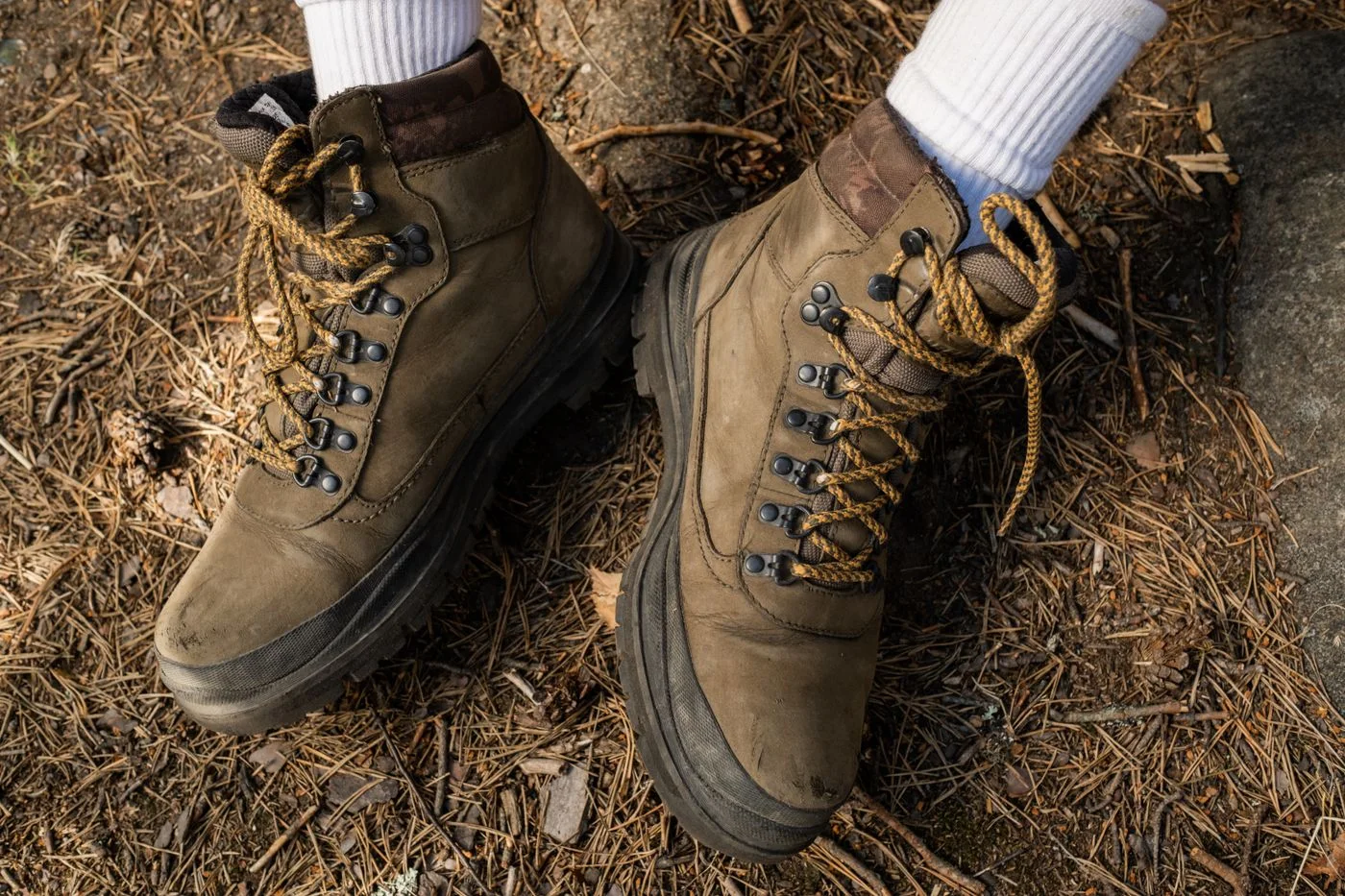
A boot may feel pleasantly roomy around the toes while allowing too much movement at the heel. Pulling the laces progressively tighter does not necessarily resolve that mismatch. Assess the heel deliberately and record the movement that produces slipping. This turns a vague sensation into a question you can discuss during a fitting.
Describe the movement precisely
Start by walking slowly ahead. Does the heel lift inside the boot with each step, or is only the sock moving around the collar? Notice whether you unconsciously curl your toes to hold the footwear in place. These observations help more than saying simply that the boot feels large.
Then use a suitable step or shop fitting surface. Another movement may change what happens at the heel. Ask the fitter for an assessment rather than inventing a millimeter limit from one observation. A quick hand test cannot provide a universal approval for every construction.
Check both boots. If only one side behaves unusually, that matters. Do not immediately replace just that sock with a much thicker one without reassessing the entire arrangement.
Try a deliberate adjustment
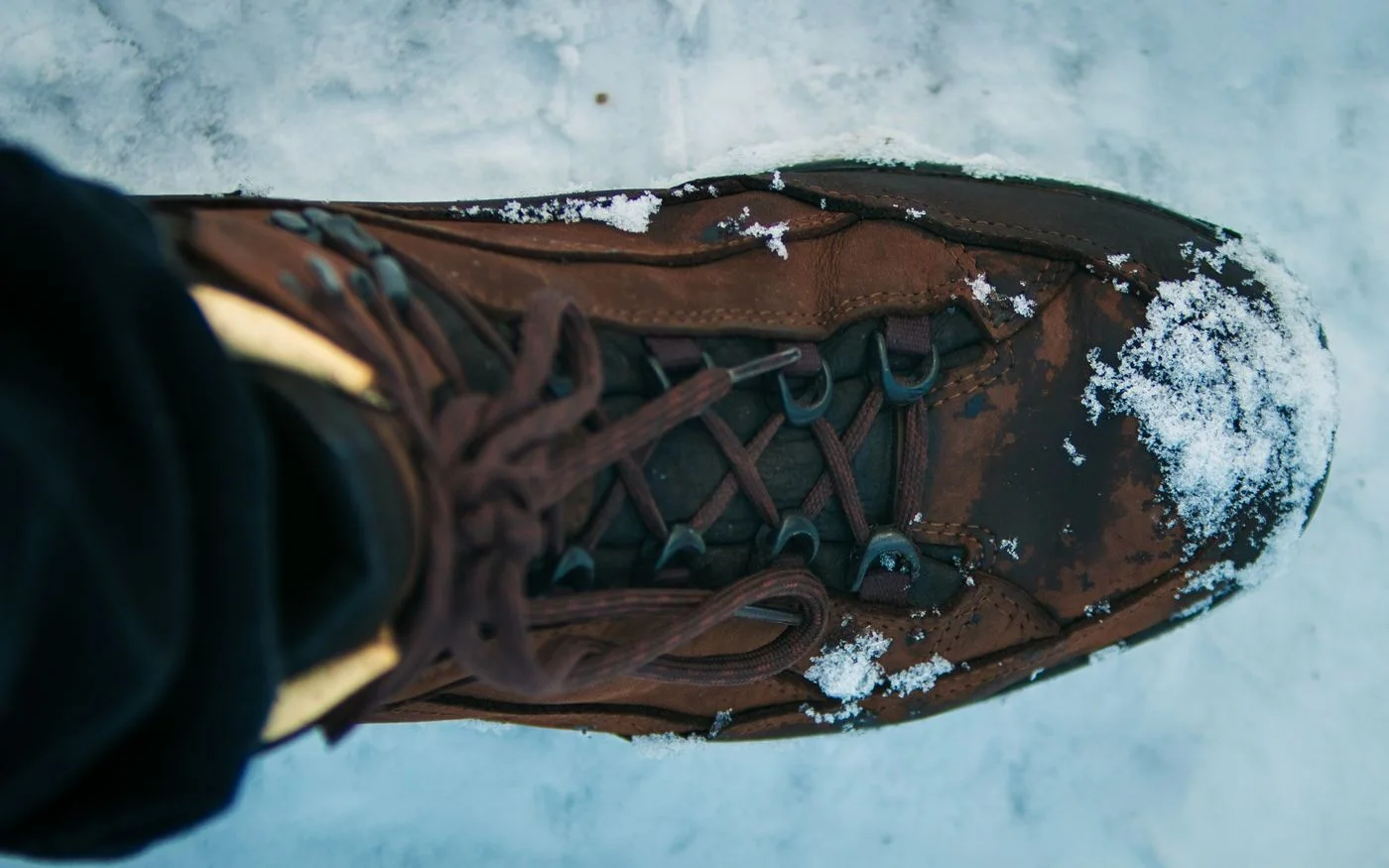
Release the lacing, reposition your foot and center the tongue. Even the lower crossings before closing the upper. A zone left accidentally loose can distort the initial impression. Repeat the same walking movement afterwards.
Some models provide specific ways to adjust heel hold. LOWA describes a directed lacing-tension feature on certain constructions, for example. That is a model feature rather than a promise about every pair from the brand. Ask for a demonstration of the functions on the actual boot and use them as intended.
Hold achieved only through uncomfortable tension is not a convincing result. Extra pulling should not become the sole answer to every fit question. Compare another shape rather than tightening the upper indefinitely.
Let the complete fit determine the result
A closer heel fit helps only if the rest of the footwear remains appropriate. Recheck toe room, side contact and pressure over the foot after each adjustment. Another insole can change several areas simultaneously, so include it in a deliberate comparison.
Finally, record the arrangement that worked: model, size, socks and any specific adjustment. These details make a clean repeat fitting at home possible. If the result remains contradictory, another candidate is more useful than hoping your foot will become accustomed to uncertain hold.