Choose an area rather than a whole list
A map crowded with building markers can turn a free walk into a series of tasks. For a first visit, choose a manageable area and clear starting point, perhaps a public square or stop near its edge. Connect two or three streets without trying to fit every landmark into the afternoon.
If a particular building matters, give it time and shorten the rest. Admission, a guided visit, or an open gate should enter the fixed plan only after checking current arrangements. Looking from outside is also a complete visit when chosen deliberately.
Use street shape for orientation
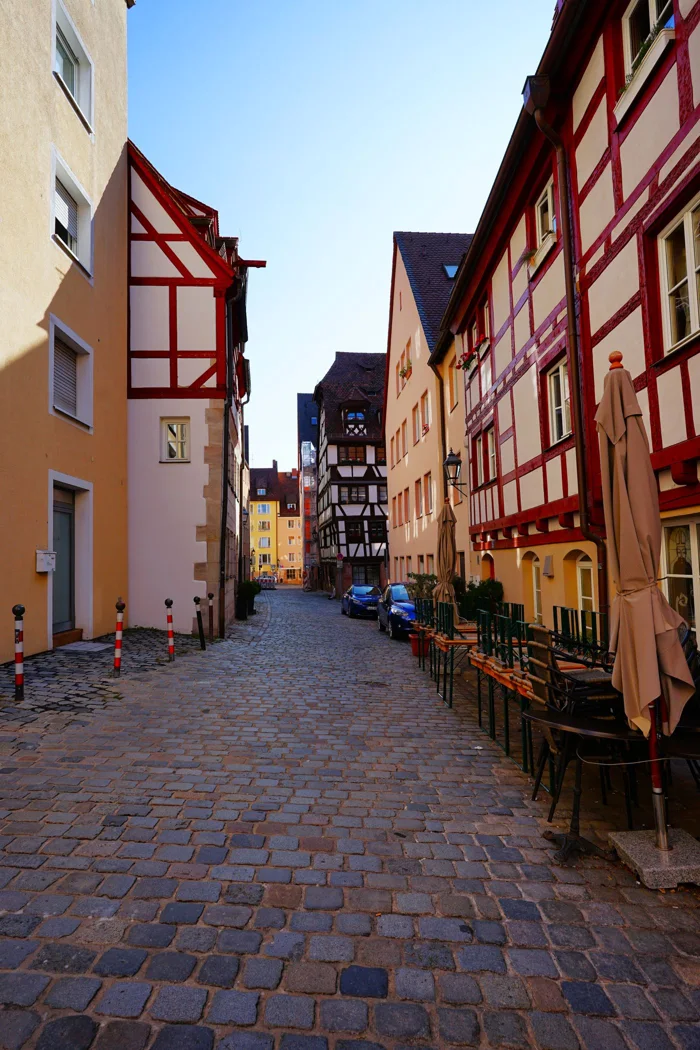
Notice how lanes meet squares and where broader links cut across smaller streets. These forms can help with recognition without requiring a theory about their historical origin. Begin with observation: the space narrows here, opens there, and this street returns to the known square.
Follow a small loop back to a recognisable point. If you want more, start another small loop there. That can feel easier than allowing the route to expand continuously and searching for a way back only at the end.
Pay attention to public routes and entrances. An appealing courtyard may be private or accessible only at certain times. An open gate does not invite exploration of every area beyond it. Use intended entrances and choose another street where access is unclear.
Look more closely at materials
Give one visit a small theme: doors, changes in paving, or window shapes. This directs attention toward details easily missed in a rapid sequence of famous façades. You need not photograph every example. Comparing two neighbouring buildings may provide enough interest.
Separate an observation from its explanation. Uneven paving establishes a surface, not automatically its age. An inscription may offer a clue; further historical claims need an appropriate local source. The walk can leave questions open instead of attaching a plausible story immediately.
Keep one or two specific questions to investigate later. Attention can then remain with the place. Looking up every construction date can interrupt the walk as much as trying to document every view comprehensively.
Find room to pause
Narrow lanes remain routes through the area. Move to a suitable wider place for a pause and keep entrances clear. The same applies to photography: stepping aside can let others pass without giving up the view.
Choose a place for a longer stop before the outing becomes only a pattern of standing and moving. Observe how people use that space. Market stalls, a fountain, or seating can change the impression without supporting broad conclusions about all life in the town.
The return may use a familiar street
An unfamiliar connection is unnecessary on the way back. The same street in reverse reveals different façades and sightlines. You may notice how a lane frames the starting square. The second perspective is not a failure of variety.
Finish with a clear return and time to arrange the impressions. Another small area can remain for a future visit. Familiarity comes less from completing markers than from recognising paths and relationships you have actually noticed.