Recommendation and permitted range
LEKI provides length guidance based on height and activity and describes its result as a non-binding recommendation. The distinction matters: a chart helps with shortlisting but does not replace fitting. Hiking, Nordic-walking, and other pole types are not interchangeable merely because they have similar lengths.
Compare the recommendation with the model's usable range. Extension marks show how far an adjustable section may be drawn out. A printed scale is not permission to exceed that limit. With a fixed folding pole, the chosen length must already suit the intended use; later adjustment is not necessarily possible.
Include your normal footwear and load
Stand in the shoes you normally use for the trial. Hold the handle as designed and assess natural operation. Follow the measuring instructions of any manufacturer's selector. A height measured without shoes differs from an input that explicitly includes footwear.
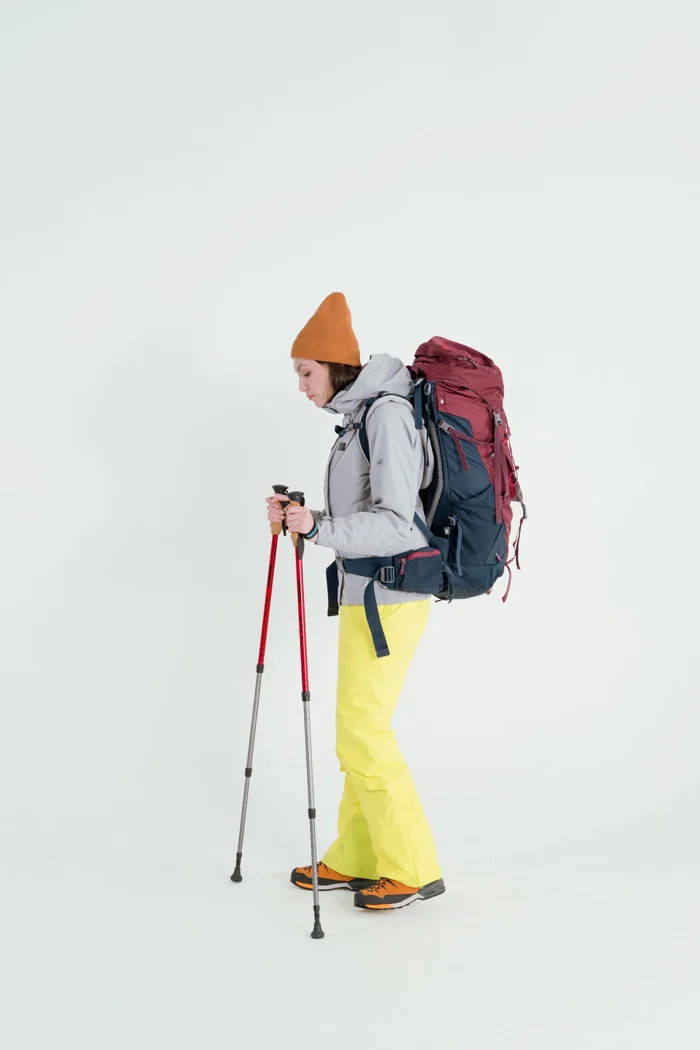
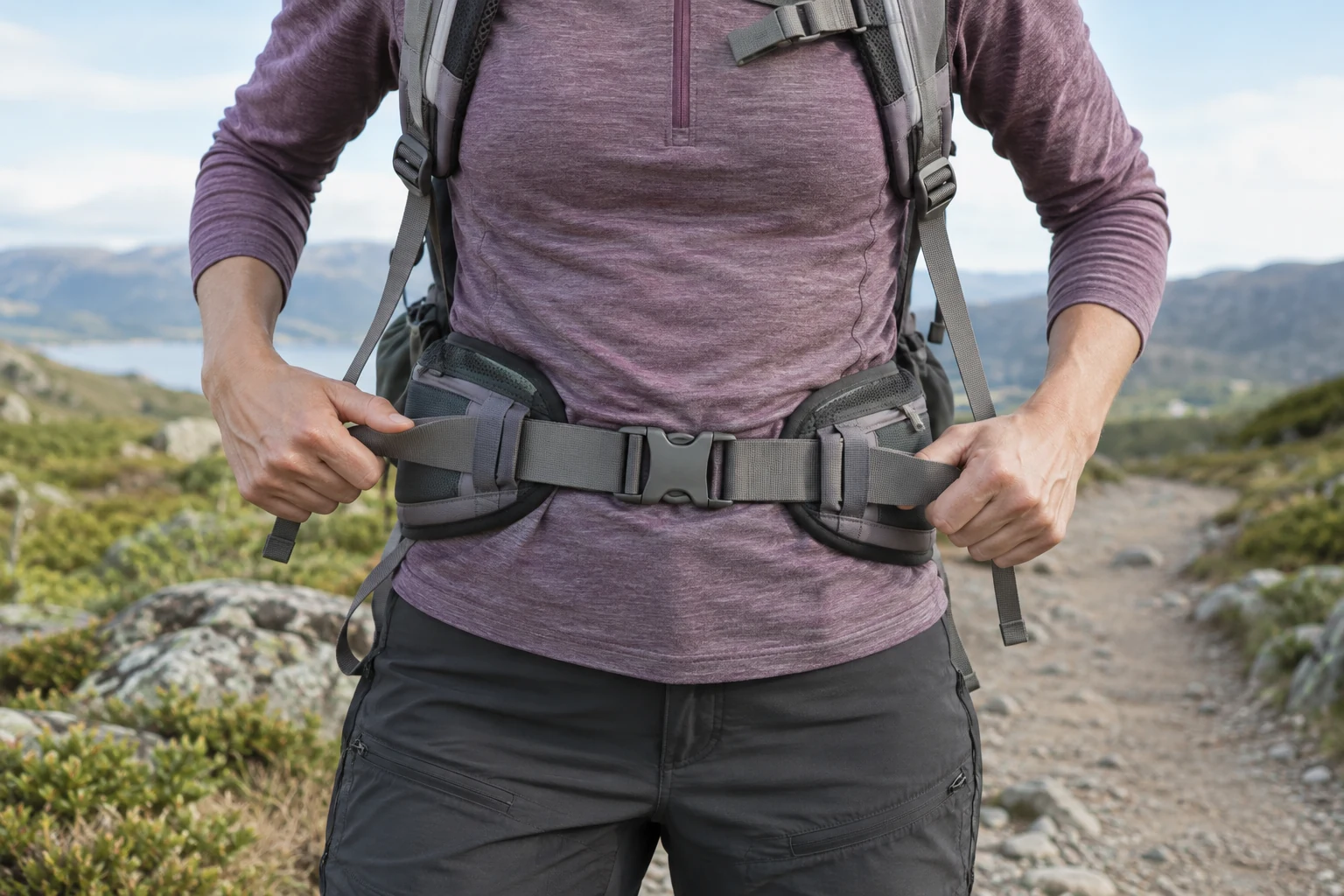
Wear your usual pack too. Its harness and your arm movement belong to the real arrangement. This is not a medical assessment or a promise to protect joints. You are checking controlled use of the grip and whether the available settings make sense, rather than continually compensating with an unintended hand position.
Grip extensions and straps
Some handles extend their usable surface below the main grip. This can provide another intended hand position. Check the description instead of treating bare shaft as an equivalent handle. Not every situation requires changing the whole pole length; the relevant question is which positions the construction supplies.
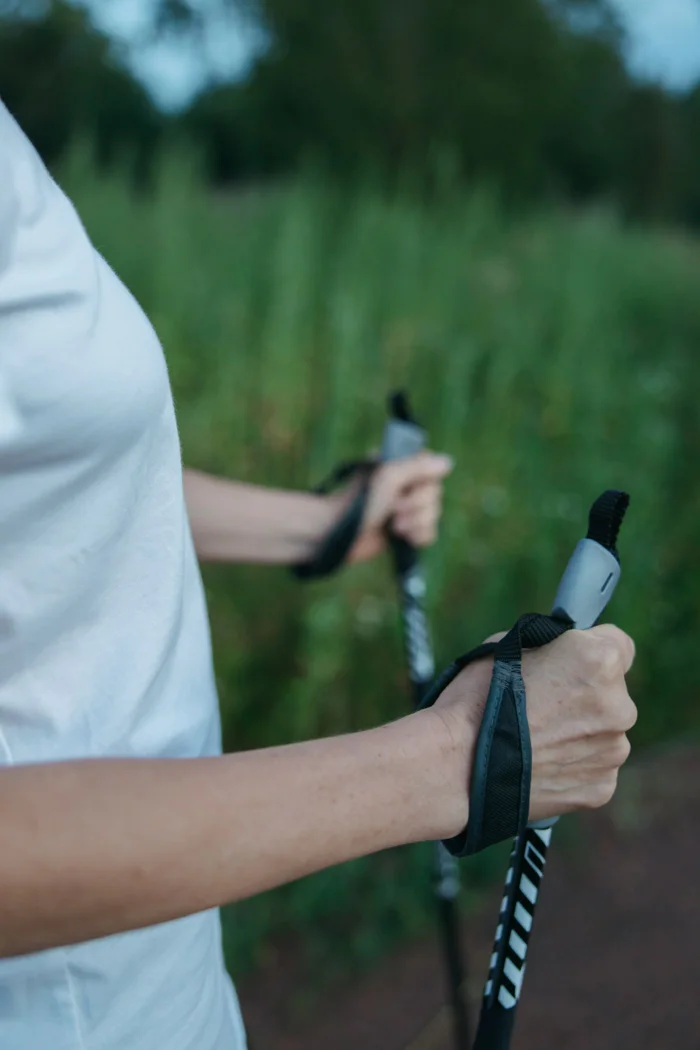
Wrist straps differ too. Adjust and operate them according to the actual instructions, including how to insert and release your hand. Do not copy another pole's technique automatically. Try your gloves if you use them. A strap should not be adjusted so that the handle becomes difficult to reach and control.
Check after every adjustment
Change length while stationary and close the designated lock completely. Verify that each section remains within its permitted range. A slipping section does not become reliable when its movement is ignored. If a correctly operated clamp still fails to hold, follow the service guidance instead of continuing as usual.
Record a useful starting length if it simplifies future assembly, but inspect both poles again each time. Unintended differences can result from sections being adjusted at different positions. A helpful number supports the routine; it does not replace visual checks or the limits of the locking system. These checks remain relevant even when the poles were comfortable on the previous outing.