Read the size information carefully
A pack may list capacity, torso length, and belt circumference together. They describe different properties. Volume concerns the space inside. Torso length concerns the span for which the suspension is designed. Hipbelt circumference does not establish shoulder-strap length. One suitable measurement therefore cannot replace the other checks.
Makers such as Osprey use reference points at the base of the neck and the top of the hipbones when explaining torso measurement. Ask someone to help and follow that manufacturer's diagram. Do not simply measure an existing backpack. The relevant question is whether your measurement falls within the stated range for the actual model.
Fixed or adjustable?
A fixed suspension can work well when its geometry suits you. Adjustment broadens a range but does not make every pack suitable for every back. Check whether the mechanism moves the shoulder harness attachment or merely shortens the loose ends of the straps. Those are different functions.
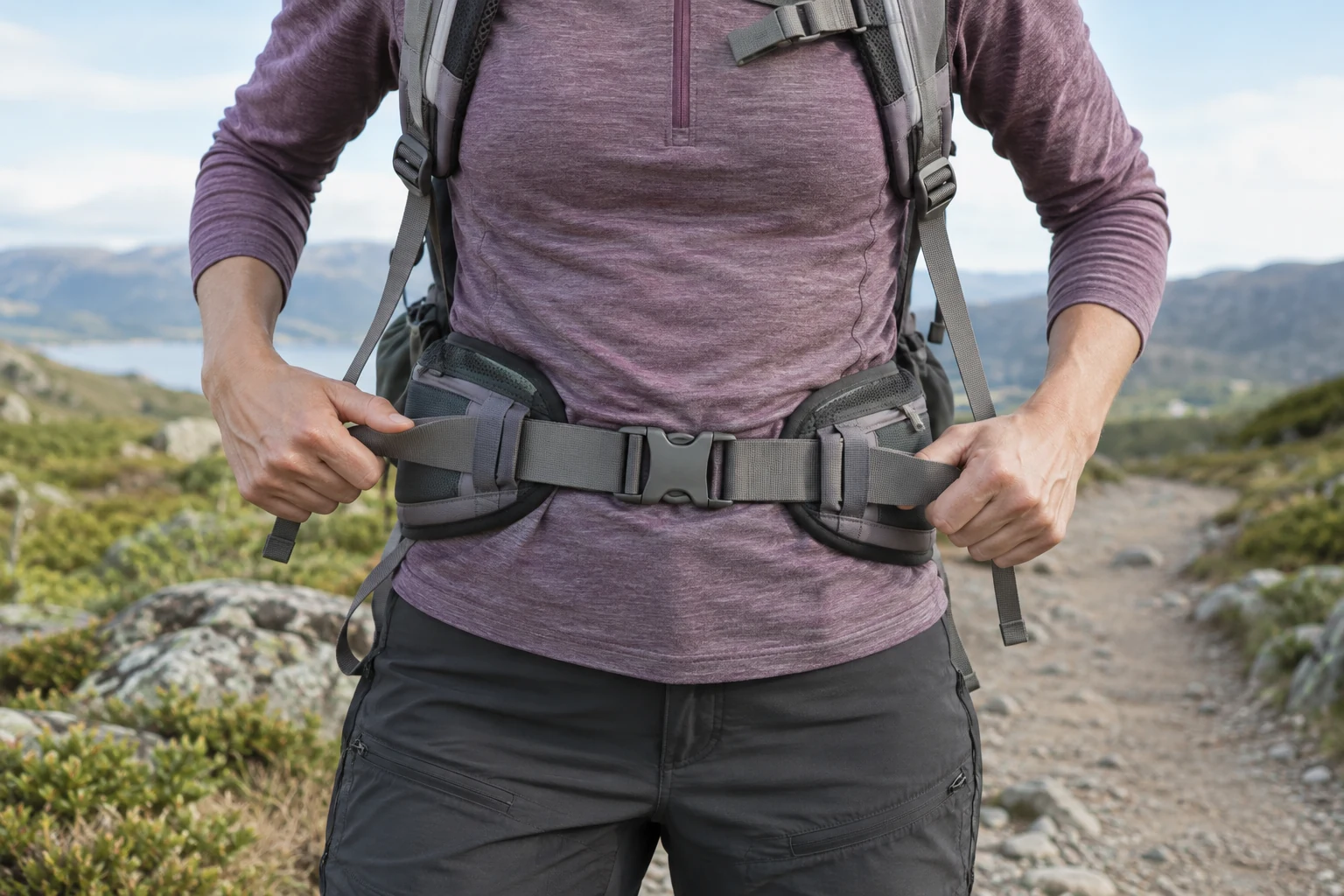
Loosen the straps before trying the pack and add a representative load. Position the hipbelt according to the instructions, then bring the shoulder straps into contact. With a model that lacks a load-bearing belt, assess the support and stabilization it is designed to provide. Do not transfer a large trekking-pack procedure unquestioningly to a simple day bag.
What the fitting should reveal
The shoulder padding should follow the shoulder rather than touch only one small area. Notice whether the harness attachment appears too high or too low and whether you achieve the desired position only by excessive tightening. A sternum strap can hold the shoulder straps together; it cannot correct a fundamentally unsuitable torso length.
Walk with the loaded pack, lift your arms, and include the jacket you normally wear. An arrangement that only works while standing still is insufficient. Change one factor at a time: back length first, then strap tension. Otherwise, it becomes difficult to identify which adjustment made a difference.
When the adjustment reaches its limit
If the back-length mechanism is already at one end of its travel and the contact still feels wrong, compare another size or model. Shoulder spacing, padding shape, and belt length can also be responsible. Record a useful setting after the loaded fitting. Treat that number as a repeatable starting point, rather than a guarantee that the pack will suit every load and clothing combination.