Two different layers of protection
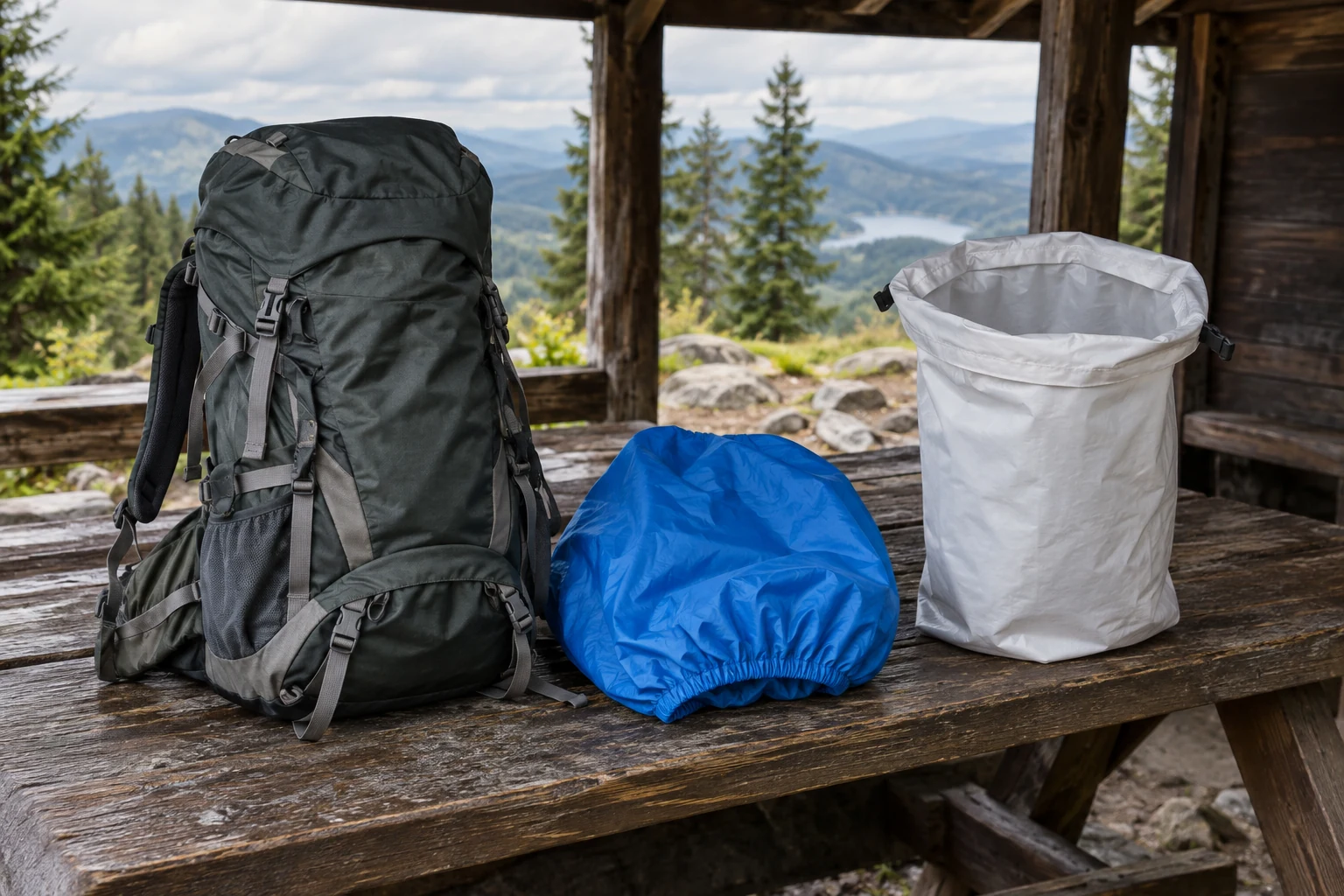
A rain cover goes over the pack. It keeps much direct rain away from the outside and may prevent exterior fabric and pockets from becoming extensively wet. Depending on construction, the back and harness area remain partly open. A liner instead sits inside the compartment and protects contents within its own correctly closed enclosure.
This distinction explains why both can be useful together. The cover reduces external wetting; the liner organizes protection around items that need to remain dry. It also explains why a cover does not automatically turn an ordinary backpack into a waterproof container. Check the actual model's claims rather than assuming unrestricted protection.
Fit the cover to the loaded shape
Compare the stated size with your filled bag. A cover that fits an empty pack may be too small over an externally attached jacket. It should cover the intended area and use the available retention points. A loose cover can shift, especially when the pack's shape changes considerably between outings.
External poles or a sitting pad alter the fit too. Try the combination at home and rearrange items if necessary. Do not force the cover over sharp ends. You should be able to put it on promptly when rain starts without first reorganizing everything carried outside.
Access still matters inside
One large liner can contain dry clothing and other suitable belongings together. Its opening needs enough room to close fully as instructed. Avoid filling a roll-top liner so tightly that no neck remains. Smaller dry bags allow selective separation, but introduce more closures and require a clear arrangement.
A wet rain layer does not automatically belong in the same closed bag as your dry fleece afterward. Reserve another location. A spill inside a liner can also wet other items enclosed with it. Bottles and lunch boxes still require appropriate closures and placement; an outer barrier cannot correct a leak among its own contents.
Water resistance is a specific product property
An ordinary fabric sack differs from a coated bag with a purpose-designed closure. Sea to Summit also explains that roll closures have limits when protecting sensitive electronics. Use protection appropriate to its stated conditions. Rain on a footpath is not equivalent to prolonged immersion.
Inspect seams, coating, and the closure before use. A damaged inner barrier does not automatically become waterproof again after a general reproofing treatment. Match the enclosure to the requirements of the objects it contains. An unexamined plastic bag should not replace a verified product claim.
After the rain
Remove the cover after the walk and dry it separately. Empty and open the backpack and internal bags. Folded corners and pocket edges may retain moisture after visible surfaces appear dry. Close the arrangement for storage only when the components have dried completely. That leaves it ready to use rather than simply present in the bottom of the pack.