Look at relationships between structures
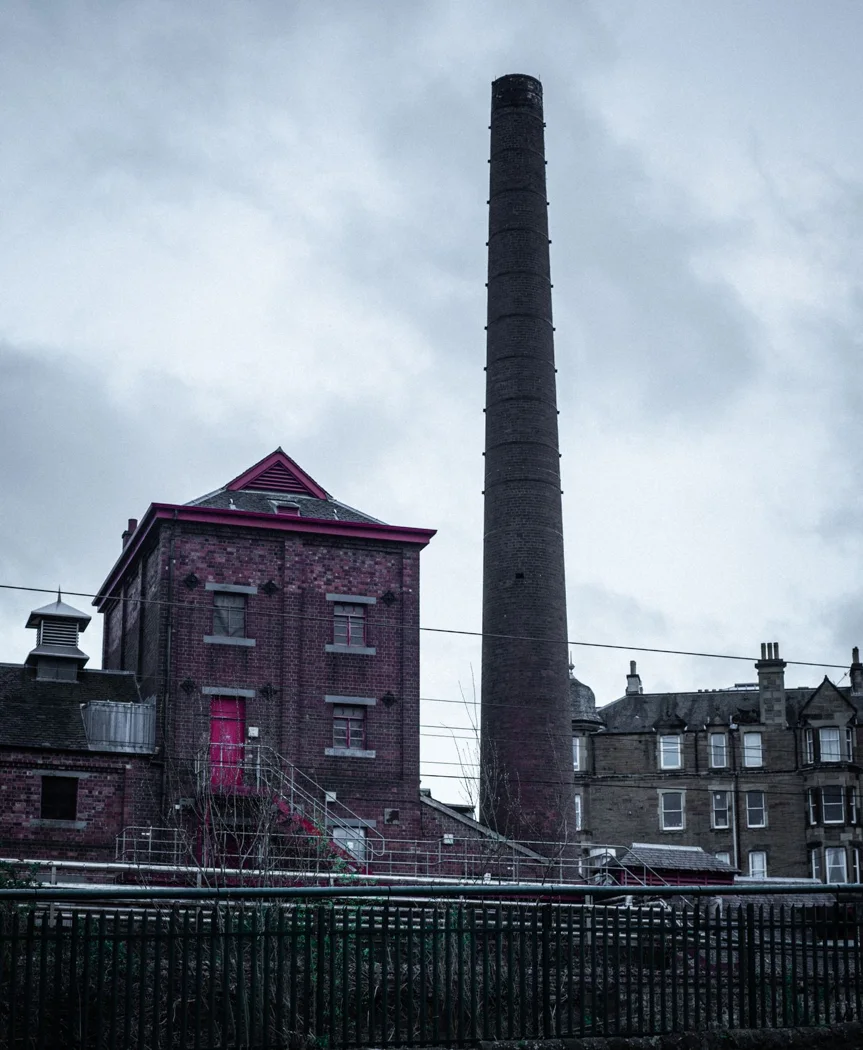
A former industrial area need not be interesting only through its most conspicuous building. A chimney draws attention, but an entrance, water connection, or arrangement of halls can raise questions too. Choose a publicly accessible area and notice how these parts relate spatially. The walk gains a theme without requiring entry into every structure.
Start somewhere clear, such as a stop or designated park entrance. Check which routes are open. Buildings may have new uses, and a quiet space may still be private or working land. An abandoned appearance does not establish access.
A small loop with two or three visible reference points is often enough. It might connect a building, waterway, and open square. Interest lies in relationships: where entrances face, where movement has room, and which links can be followed from the public route. These observations initially require no historical claim.
Do not confuse traces with explanations
A rail embedded in the ground may indicate an earlier connection. Without a source, it does not establish what was carried or when. Look for a board, local museum, or publication from the responsible organisation when a question interests you. That is more precise than deriving a complete history from appearance.
The same applies to construction. Large windows, substantial brick walls, or a roof form are noticeable but do not fully explain a former operation. Describe what is visible first, then investigate whether the interpretation is supported. A walk can leave room between observation and research.
Check current opening information for a museum or tour. Prepare an outside route that still works when entry is unavailable. The place remains interesting without the entire outing depending on one open door.
See the present place too
Industrial traces may sit beside homes, offices, workshops, or open spaces. Notice current uses as well as older forms. A former workplace can retain functions or acquire several new ones. Establish what is present from visible information and reliable sources, rather than a desire for a dramatic transformation story.
For photographs, choose suitable public positions and keep entrances clear. A long view of a façade may work better from the opposite pavement than directly at its gate. Private interiors and people working do not need to enter the picture just because the subject is building history.
Finish with one specific question: what was the water connection for, why does the entrance face this way, or which use is documented? Returning with an answer can reveal more along the same short walk. Continually adding remote areas is unnecessary.