Understand the construction first
Telescopic poles slide several shaft sections inside one another. Their locking system retains the chosen length. Folding poles instead separate into shorter connected sections that are assembled and tensioned or locked using the intended mechanism. The precise sequence belongs to the model's instructions.
Folding does not automatically mean length-adjustable. Some designs have one usable length; others include an adjustable section. Black Diamond's FLZ constructions illustrate how folding and length adjustment can coexist. Compare allowed length, assembly, and packed dimensions rather than two category names.
Material is a separate property again. Aluminium and carbon do not establish a universal ranking covering every construction and application. Assess the actual weight, declared use, and handling. A short folded pole may weigh more than another model; its construction name does not answer the weight question.
Try the packed shape on your backpack
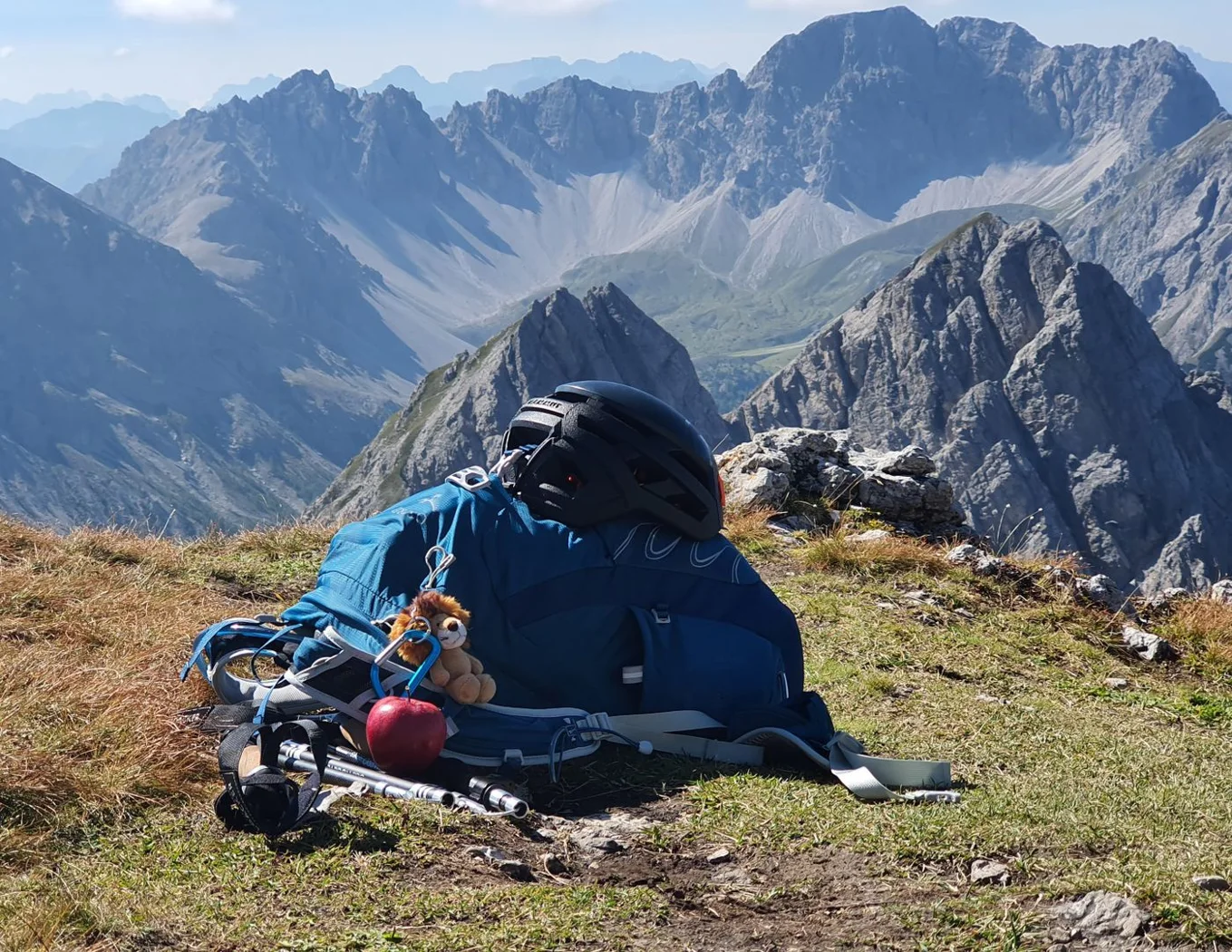
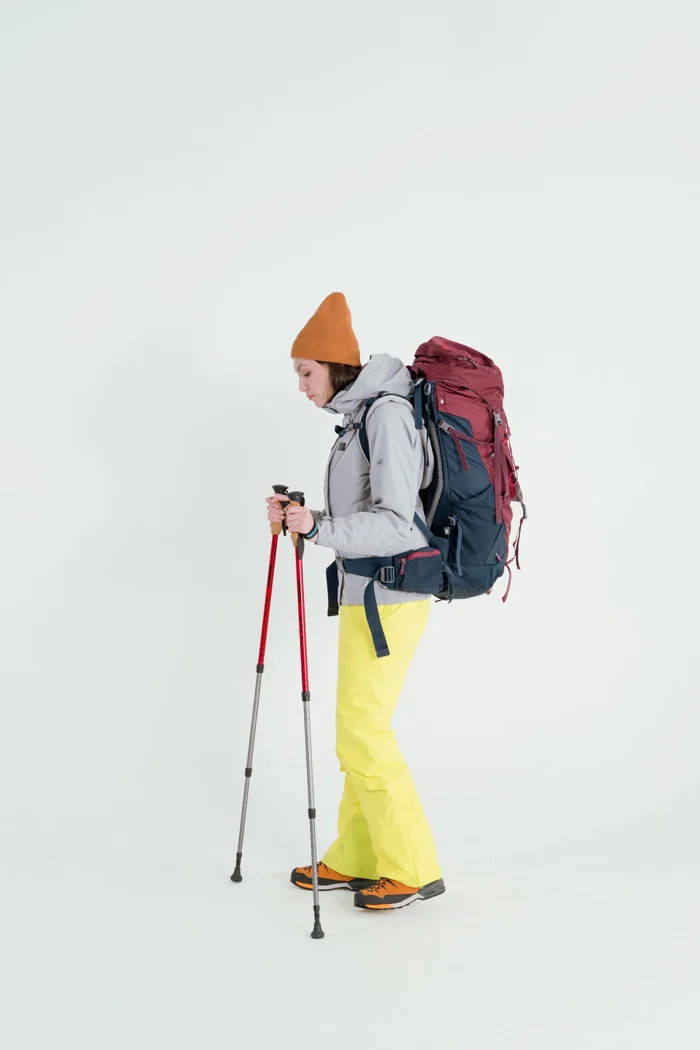
A folded pole creates a bundle of short sections. It needs suitable width and attachment points that retain that bundle. A collapsed telescopic pole often remains longer and narrower. Measure the combination on your pack. One length specification does not show whether handles, baskets, and straps fit your holders.
For internal carrying, keep tips away from clothing and coated bags. A designated sleeve may help. External poles need retention that prevents them swinging when you bend or put the bag down. A loop designed for another tool is not automatically an appropriate pole attachment.
Consider when you pack them away. Occasional use allows a different assembly routine from frequent changes between carrying and walking. The fastest arrangement in a demonstration is not necessarily the simplest with your gloves and other equipment. A calm hands-on trial provides more useful information.
Assembly should be unambiguous
Assemble both poles several times as instructed before taking them out. Learn how a complete lock is identified. A clamp must not merely look approximately closed. Respect maximum-extension marks and avoid pulling sections beyond the permitted range. Check each pole separately even when they appear identical.
Folding sections must seat properly. Sand or soil at the connections can obstruct assembly. Avoid placing the pieces unnecessarily in dirt and do not force a mechanism under tension. If a section will not seat, release and inspect it according to the instructions instead of continuing to pull.
Make the remaining decision concrete
Choose the construction whose packed shape and operation suit your use. A short bundle may help inside a small backpack. A larger adjustment range may matter when you regularly change length. Both properties must be present in the actual model; neither follows from the category alone.
Include care in the decision. Connections and clamps should be accessible for cleaning and full drying. Replacement baskets or rubber tips need exact compatibility. Your own assembly trial and the instructions provide a stronger basis than a general assertion that either construction is always superior. Neither design removes the need to check condition before use.