A quiet appearance is not a footpath
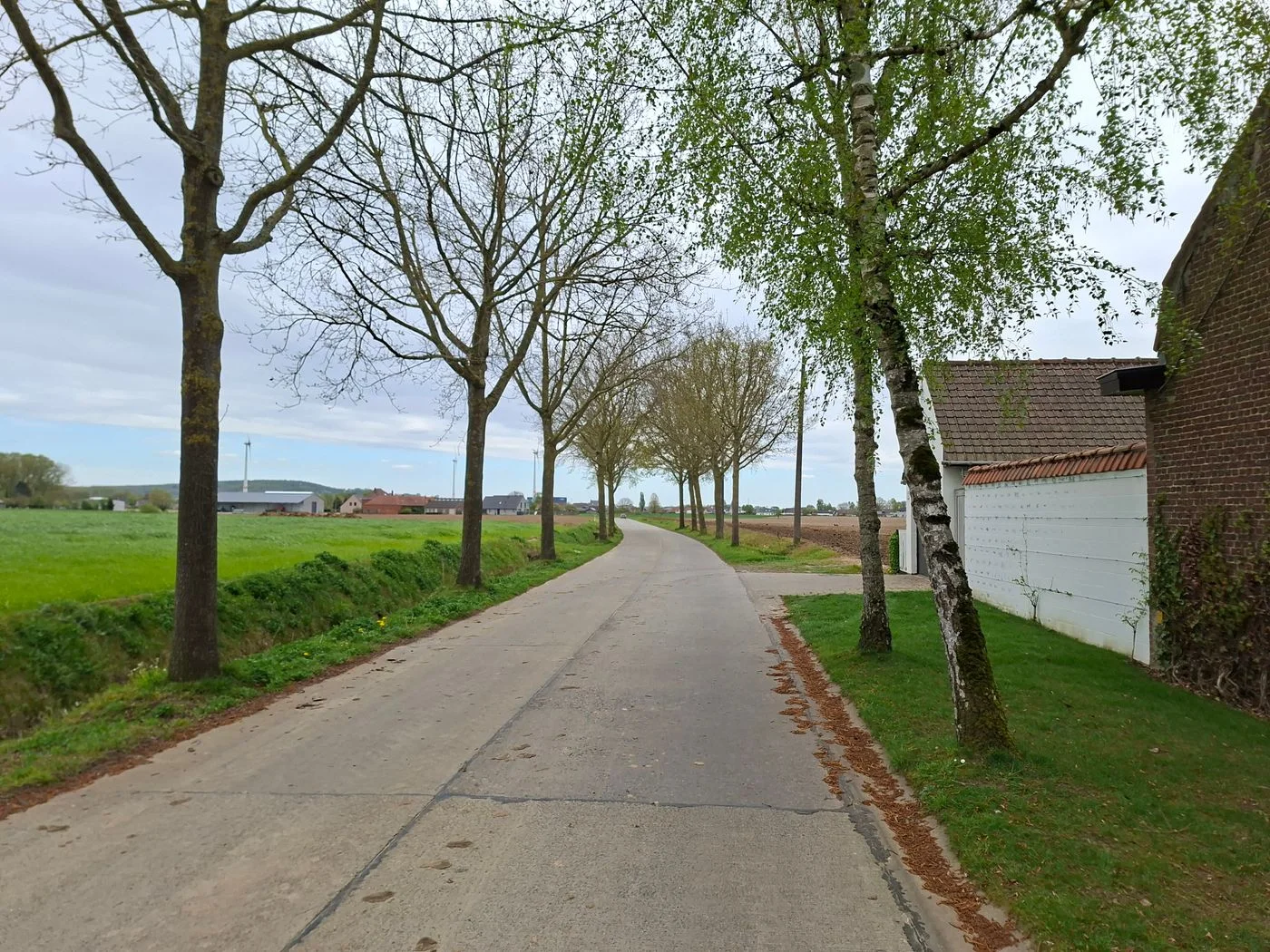
No car appears in the photograph and hedges frame the lane attractively. The image describes one moment, not the connection's suitability for a walk. For an ordinary outing, look for intended footways, appropriate shared paths, or clearly documented links. A picturesque carriageway should not become essential merely because it is the shortest line on the map.
Examine the transition out of the settlement. The appealing field path may begin beyond a substantial road section. That section belongs to the choice. If a suitable access route is unclear, select another start or landscape area. The walk need not begin exactly where the attractive photograph was taken.
Read the complete connections
Look for pavements, crossings, and interruptions. A path may begin alongside the road and finish later. A broad verge is not automatically a continuous pedestrian surface. The whole required connection needs to make sense.
Current local information and a detailed map help more than a general description such as quiet or little traffic. If the account remains unclear, choose a confirmed alternative. The outing should not depend on discovering how to manage an unsuitable road after reaching it.
For groups or a walk with a dog, space can play an even greater role. Describe necessary road sections honestly. A conversation outing should not spend long stretches where tight encounters demand constant attention and determine the whole rhythm.
A small field path may be enough
Instead of connecting a large loop over several roads, follow one suitable path outward from the settlement and return. A clear turnaround provides a complete short outing. Reversing the view changes the landscape even along the same section.
Pause somewhere suitable away from necessary access. Yard entrances and gates are not spare rest areas. A designated place beside the path or a stop back in town can make the schedule clearer. The walk does not need to connect every appealing landscape feature.
For a longer loop, find a second confirmed pedestrian connection before fixing the return. An apparently parallel working track may finish elsewhere or lack suitable access. Returning should not depend on a sequence of guesses.
Choose the countryside walk for its purpose
Identify what the open setting should offer: a field view, a line of trees, or a change from streets in town. A short appropriate path may already provide it. More distance does not automatically mean more landscape experience.
After trying the route, build a personal selection from sections that genuinely work. Record clear access points and connections you would omit next time. The result is a set of suitable walks rather than every line that looks rural on the map.