Look at the open surface
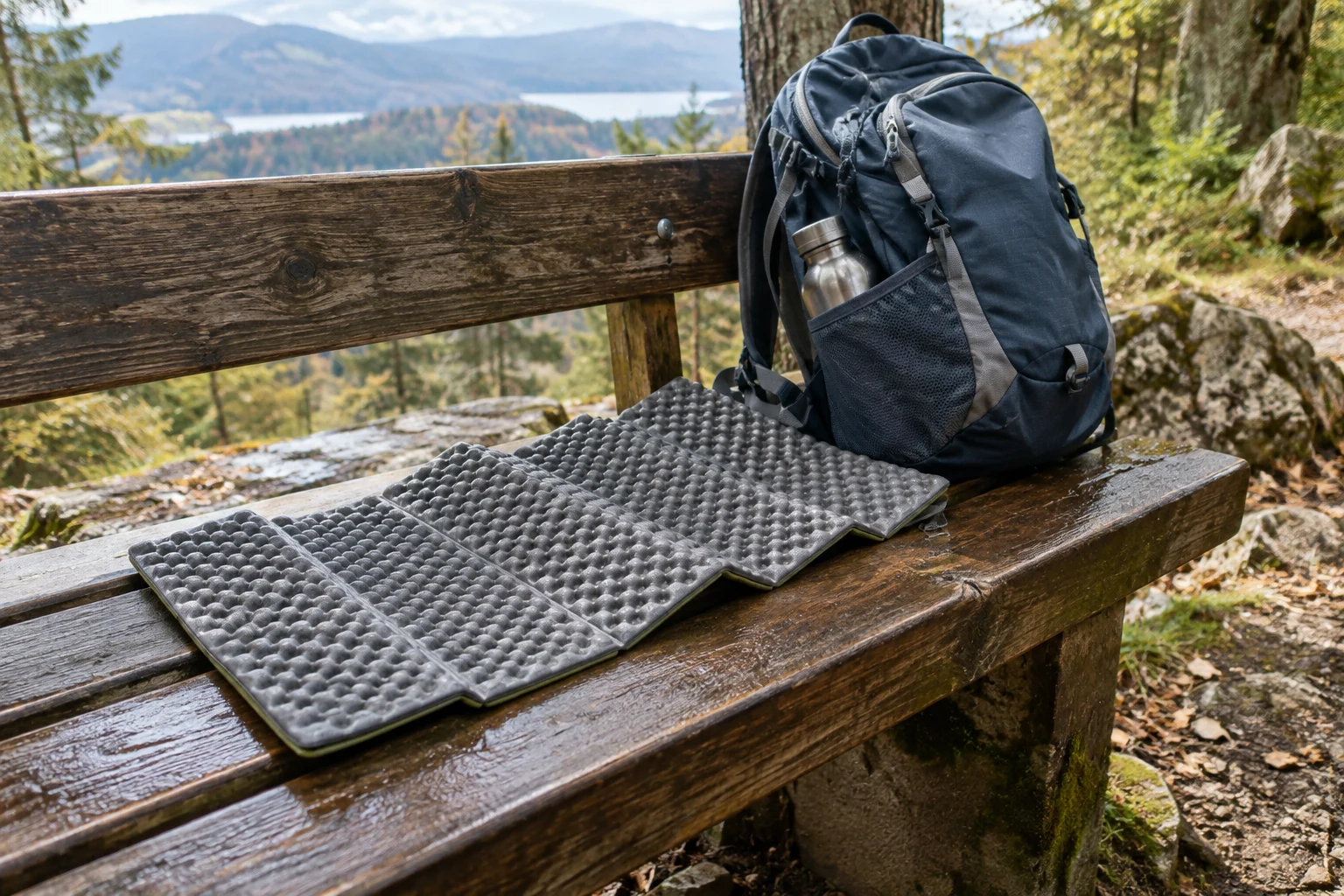
A small sitting pad provides a separate surface on a bench, stone, or grassy area. Closed-cell foam needs no inflation before a break. Products such as Exped's Flex Sit Pad illustrate this simple folding construction. Air-filled designs or other material combinations require a different routine.
Compare the usable area rather than only the longest dimension. A narrow strip may be too small for your preferred position. Open the pad and sit on it as a fitting exercise. Thickness alone does not show whether the shape suits your intended breaks. Equally, a large pad is useful only if you are willing to carry it.
Consider the folded form
Measure its folded shape against the pocket or location you intend to use. A side pocket may accommodate it, but that can displace your bottle. Under an exterior strap, the pad needs retention that prevents it slipping out whenever you put the pack down. Use attachment arrangements suitable for the equipment.
A pad placed directly behind your back changes the compartment shape. It is not automatically intended as additional back padding. Assess the pack with that arrangement in place. Break equipment should not compromise the suspension's useful contact or push another rigid item farther outward without you noticing.
Separate clean and dirty surfaces
Remember which side goes against the ground. After a damp break, it may carry soil or grass. Fold it as the construction permits and avoid contact with dry clothing. A simple sleeve may help when carrying it internally; that sleeve does not necessarily need to be waterproof.
Remove dirt after the walk according to the care instructions and let the pad dry before longer storage. Examine folds and torn edges too. A sitting pad is a small comfort choice for pauses, rather than a universal ground solution or a protective product beyond the maker's stated use. Its convenience depends on being easy to retrieve, use, and return without disrupting the rest of your belongings.