Begin with two connections
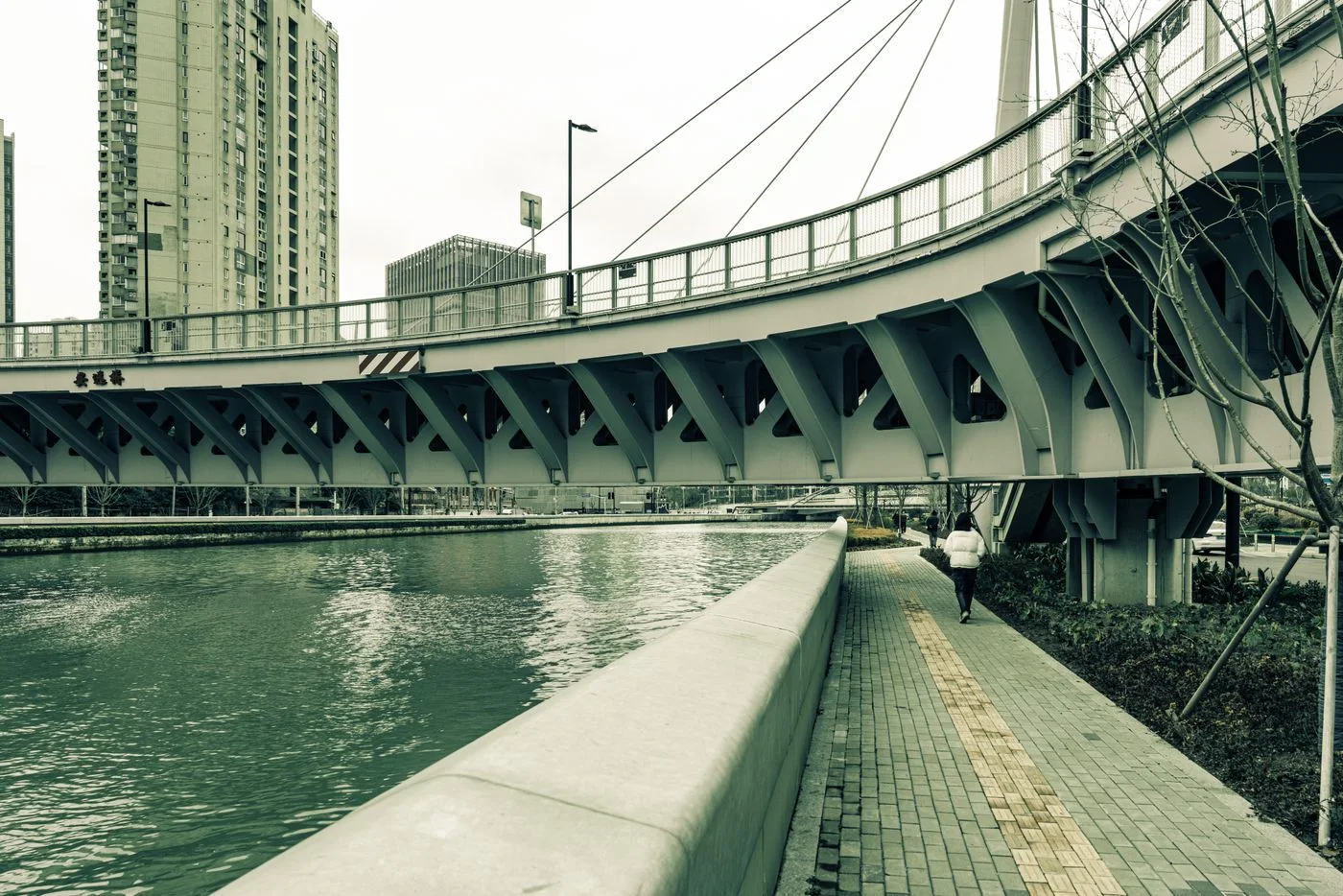
A riverside circuit is easy to draw: follow one bank outward, cross a bridge, and return opposite. In practice, the transitions often determine the experience. Start by checking two suitable crossings and their approaches. Only then select the distance between them as the walking section.
A road bridge's pedestrian access may begin at a different junction than expected. A footbridge may finish in steps on one side. Where these features matter, seek specific information. Bridge spacing alone does not explain how the loop works.
Examine each bank independently
The opposite side may be used differently: a broad promenade, narrow track, or section without a public link. Check each bank as a separate piece of route. An attractive view from the first does not establish that the second is equally suitable for walking.
Notice interruptions around working waterfronts, construction, or waterside facilities. A mapped line beside the river cannot describe every current access situation. A well-documented public route is easier for a first visit than a sequence of supposed shortcuts.
Include the connection from the actual start to the first bridge. If arriving at a station, that link already belongs to the outing. Do not count only the appealing section between bridges and treat everything else as incidental.
Direction changes the view
From a bridge, you may see the section about to be walked, giving the outing a clear beginning. In the opposite direction, that same path becomes the return. Choose according to the intended sequence: a longer walk followed by a pause, or a visit in town before reaching the water.
A suitable place on the bank can work better for photography than a bridge's narrowest point. Find room without obstructing entrances or passages. Looking at the bridge can be as interesting as looking from it.
A lively section is not automatically a disadvantage. It can be paired deliberately with a quieter stretch. The circuit then has two distinct phases instead of assuming that a riverside walk offers the same atmosphere throughout.
Retain a simple return
Look for a checked shorter option if the second bridge lies farther away than suits the day. Without another confirmed crossing, an out-and-back on one side is a complete alternative. Being a loop is not a necessary quality in itself.
When current closures affect the bank, use another open appropriate route. Follow local information rather than assuming a waterside interruption can be bypassed spontaneously. The walk should use suitable paths instead of depending on unresolved connections.
After a small circuit works well, another bridge pair can extend the range of choices. Build from known sections, while still checking each new combination's approaches. Proximity on a map is only the beginning of planning.