A long climb attracts attention during planning. Half an hour on a bench may appear only as a brief point on the map. For clothing, it is a separate situation. Decide explicitly which additional layer is intended for an extended stop and how it will combine with what you are wearing.
Locate the stop within the route
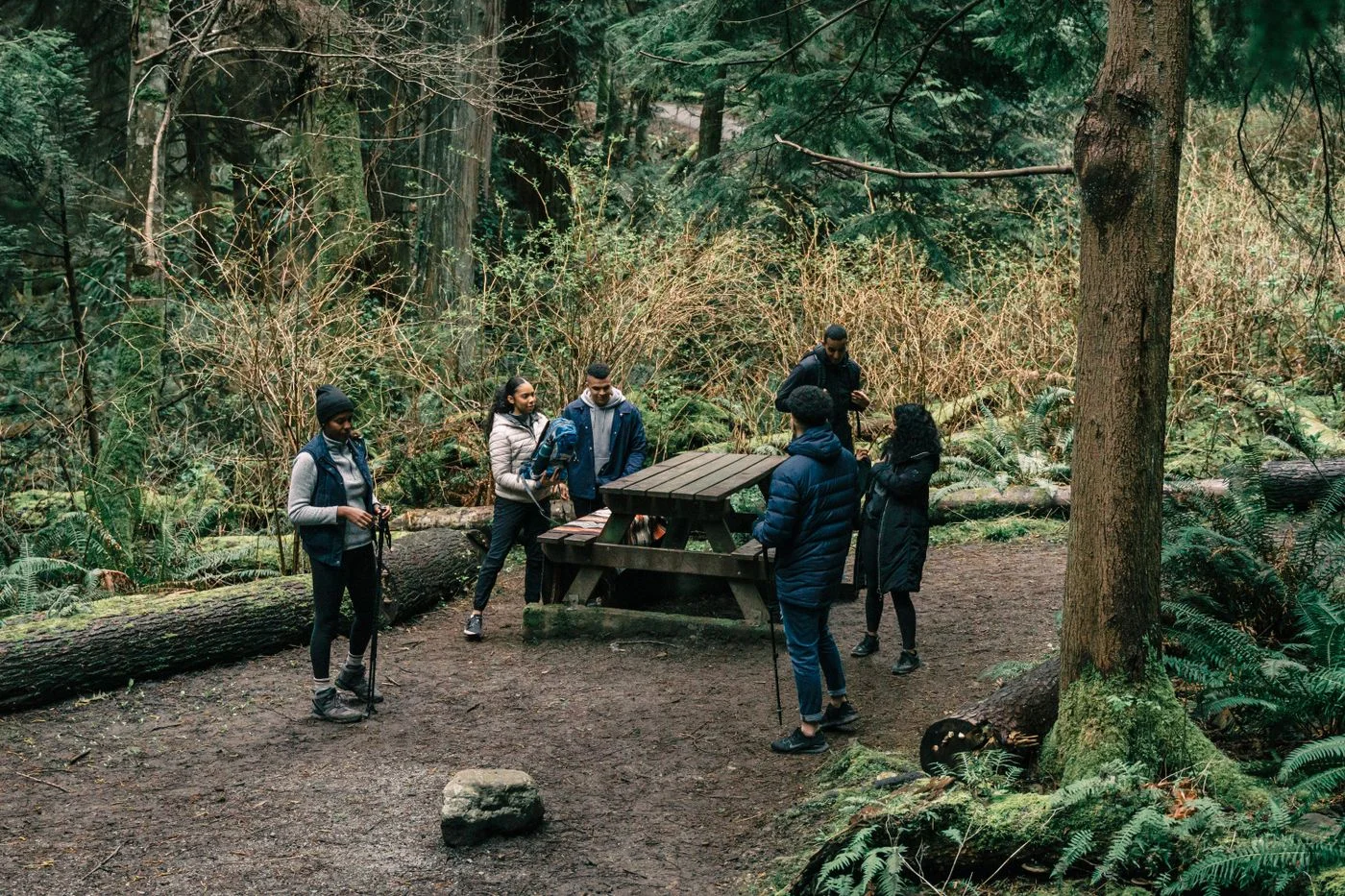
Is the planned place in woodland, on an open height or beside a sheltered building? Establish the actual situation and consider an alternative. A bench alone tells you nothing about wind shelter. Duration matters too: a brief drink and a longer meal are different interruptions.
Check the local forecast together with the clothing arrangement. The stop layer should serve this particular outing. A jacket pleasant in town does not necessarily perform the same role under different conditions. Avoid general temperature limits without reference to the full combination.
The German Alpine Club's equipment guidance includes wind and clothing dampened during activity. Treat the stop as another clothing situation rather than automatically continuing with the uphill setting. The appropriate change depends on what you encounter.
Combine existing clothing first
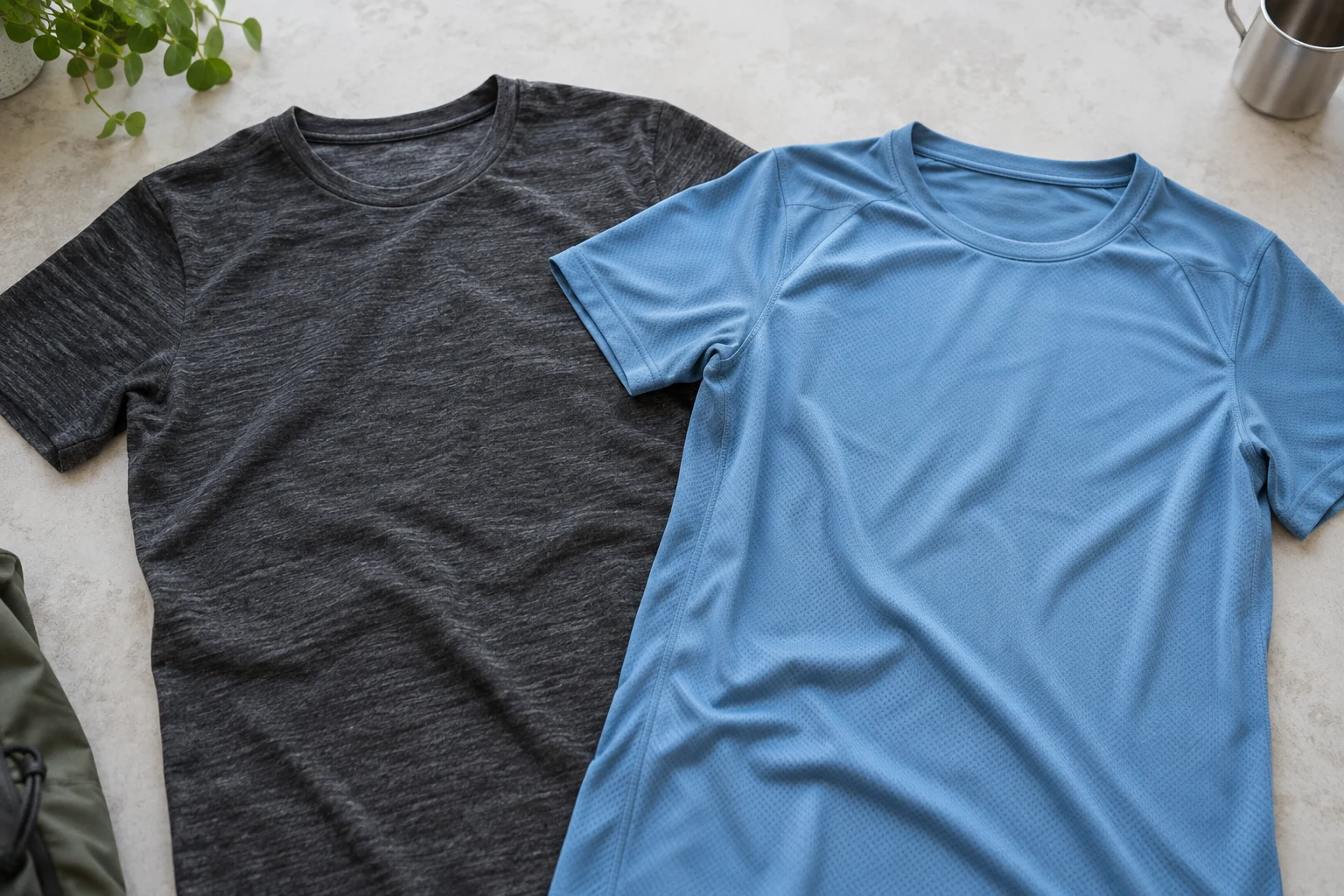
Lay out the intended shirt, any midlayer and outer jacket. Try the additional stop layer in the planned sequence. Can you close every necessary fastening and sit down? Does the outer layer pull with extra volume beneath it? Answer these questions before buying another item.
Insulated jackets do not all occupy the same place in a system. Read the description and assess the cut. A close-fitting model may serve another arrangement from a generous over-jacket. Do not choose solely from the size you wear in an unrelated garment.
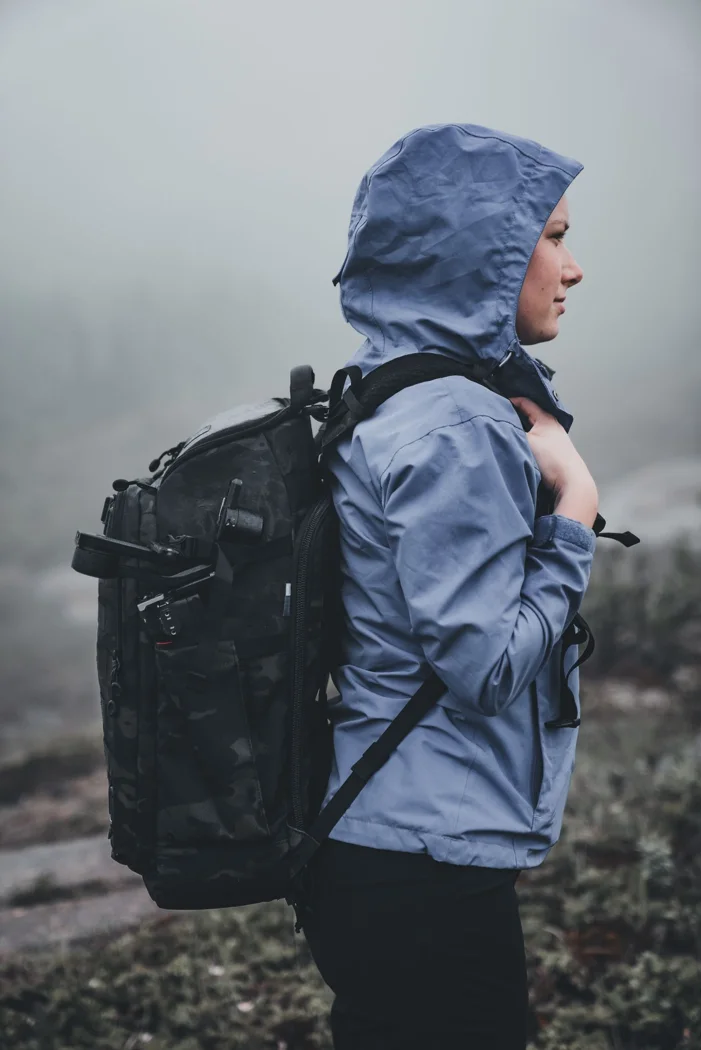
Check any hood with your hat and collars too. Three overlapping closures can gather considerable fabric at the neck. They need not all be used simultaneously, but learn the actual arrangement before stopping outdoors.
Interpret material information carefully
Down and synthetic insulation appear in different constructions. Patagonia's overview discusses differences including moisture handling. That alone cannot establish which arbitrary model will be warmer for your stop. Filling, amount, cut and the rest of the clothing all matter to assessment.
Compare specific garments intended for the same purpose. A down figure and a synthetic-material weight are not directly interchangeable warmth ratings. Ask about intended use and interpret specifications in context.
Consider care too. A jacket whose instructions cannot be managed at home adds another unresolved task. Establish drying and storage before buying rather than improvising after the first cleaning.
Arrange access before sitting
Pack the layer dry and reachable without a long search. A particular pouch may help, but is not the only solution. What matters is keeping wet outerwear apart from a dry reserve.
Retrieve it before spreading food, maps and other items around the bench. This keeps the change straightforward. If putting the pack back on, inspect the hem and pockets beneath the straps. A comfortable seated jacket may sit differently under luggage.
Reassess clothing for the onward walk. The stop layer need not automatically accompany the next climb. Accessible storage helps with both putting it on and taking it off again.
Learn from this particular outing
Afterwards, note whether the reserve was needed, fitted over the other clothing and was easy to find. “Available but buried beneath luggage” identifies organization. “Outer jacket would not close over it” concerns the combination.
That distinction supports a targeted improvement. Another purchase is not always necessary; another packing order may suffice. If an additional garment is needed, select it for a clear role rather than simply putting one more warm jacket into the pack.