Begin with your own pack
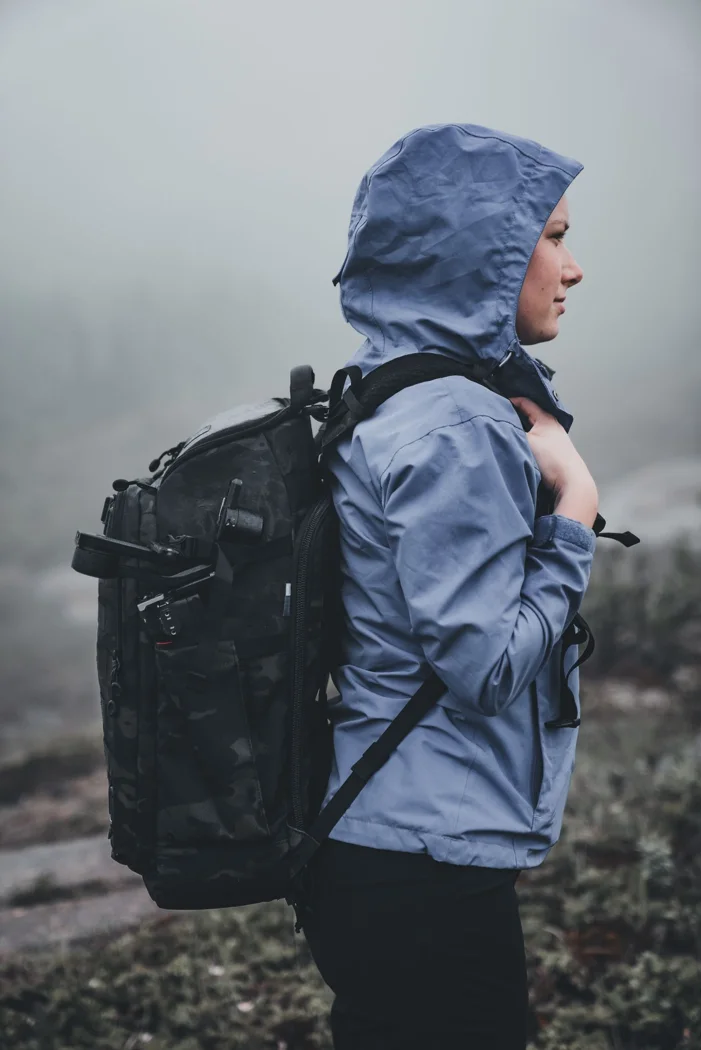
A rain jacket can feel comfortable without luggage and sit differently once the pack is fastened. Bring the daypack you intend to use and load it approximately as for your walks. Deuter recommends realistic loading when adjusting a pack. An empty soft compartment only partly represents its later fit.
Adjust the pack appropriately over your usual walking clothing first. Then introduce the jacket. Changing every strap while adding unfamiliar outerwear makes improvements or problems difficult to interpret. A known starting arrangement keeps the comparison clearer.
Include the warm layer intended for cooler conditions. A size suitable only over a thin shirt may not accommodate the complete system. Equally, avoid using the thickest clothing you own if those garments will never be worn together on your routes.
Move beyond a standing mirror check
Close the front zip and put the pack on. Raise your arms, reach forward and sit on a suitable bench. Notice whether the hem rises markedly or the shoulders and upper arms pull. Reposition once, then repeat.
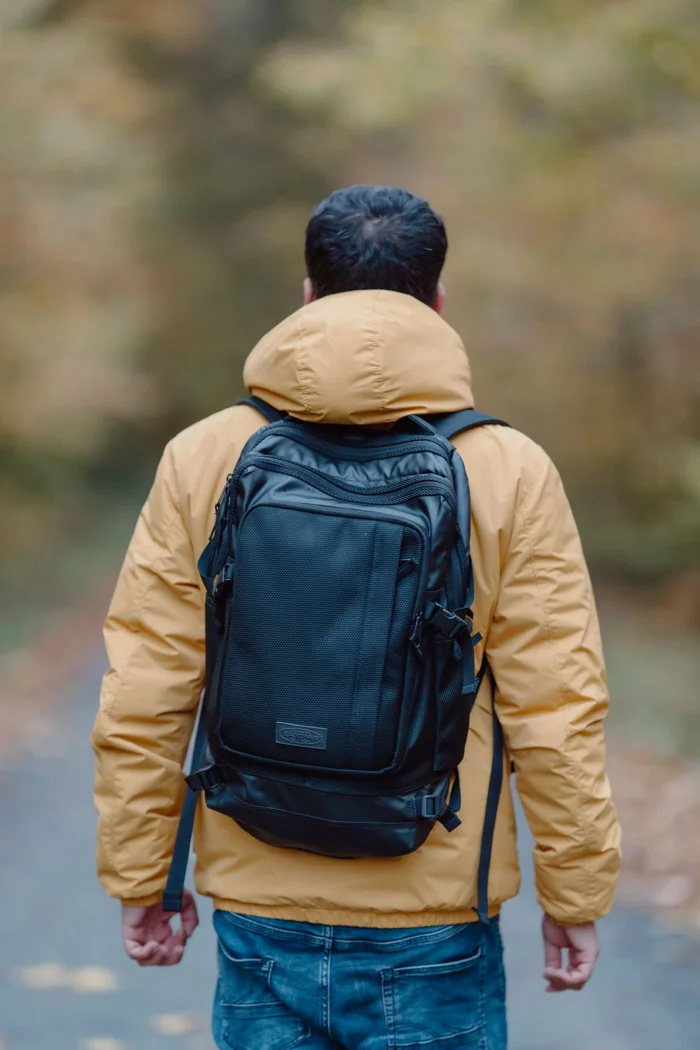
Assess the back while leaning slightly forward too, as you might when reaching a pack pocket. The planned combination should retain useful coverage without requiring continual hem adjustment.
If the jacket pulls substantially, compare another cut or size. Do not release every pack strap merely to make the jacket less noticeable. That changes luggage fit to accommodate another problem. Both pieces need to work together.
Assess pockets by their real purpose
Fasten the hip belt if your pack has one and try the jacket pockets. Some sit above it, others below. Decide which you need while walking. A pocket for resting cold hands has a different role from access to a frequently used small object.
Try the zip without pulling hard on concealed fabric. A blocked opening gains nothing from being theoretically large. Another pocket layout may suit this pack better.
Place only a harmless object inside for a trial. Notice whether its volume becomes awkward beneath the belt. An empty pocket may lie flat while a filled one creates pressure. Identify that difference before buying.
Reach the hood, vents and cuffs
Put the hood up and operate its intended adjusters. Turn your head and notice whether the pack affects the rear area. Test only functions the model actually has; a visible loop is not automatically an adjustment point.
If there are ventilation zips, try them beneath the shoulder straps. A strap over a slider may complicate access. Avoid discovering the full handling of a jacket for the first time on a wet outing.
Fasten the cuffs with any intended gloves. Reach toward a pack strap and notice whether the sleeves pull back considerably. Several short checks provide more information than standing motionless for a long time.
Include putting it on during the walk
Remove the pack and practice changing layers somewhere suitable. Find an uncomplicated sequence that keeps loose items off the ground. Keeping the jacket reachable in a particular compartment belongs to its use too.
Before deciding, check the exact model and specification. VAUDE notes different materials, membranes and features among rain jackets. A similar product name does not replace inspection. Keep the designation of the variant you actually fitted.
Aim for a jacket that performs its intended role with your luggage. A useful fitting reveals both workable actions and limits. An unnecessary access point need not become a purchase requirement; a regularly needed one should not become a discovery after buying.