After the walk, the train journey may still last an hour. A dry top can form part of a comfortable return routine. That does not automatically require a complete second walking outfit. Decide what you intend to change and give it a protected, recognizable place.
Pack the reserve for its own purpose
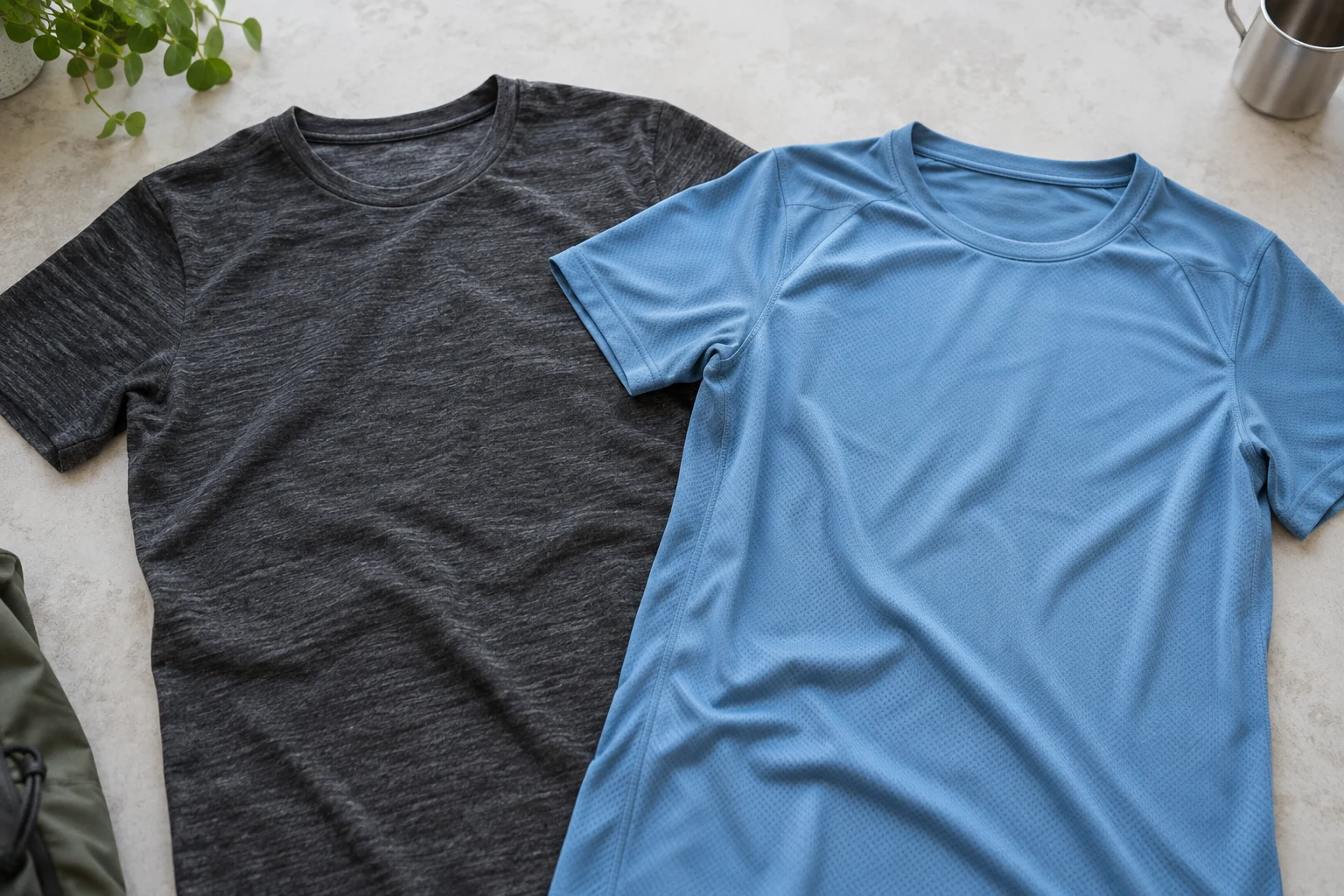
Choose a top you actually want to wear after walking. It should suit the expected setting and be straightforward to put on. The return journey differs from the earlier climb; a familiar shirt you already own may suffice.
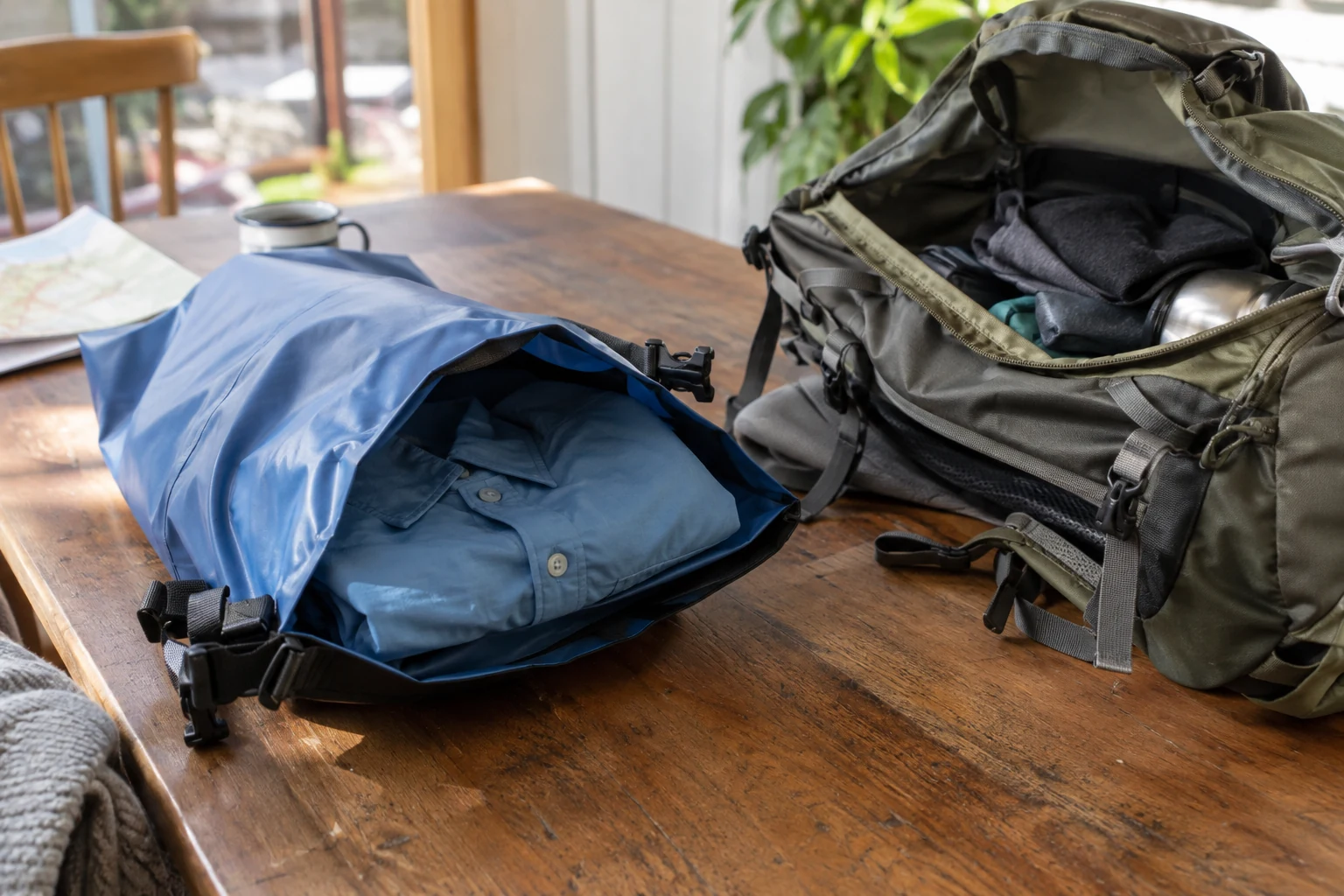
Pack it dry in suitable packaging. Read the bag's specifications where water protection matters. A fabric pouch separates belongings without automatically being waterproof. Osprey explicitly distinguishes its Dry Sacks' water protection from suitability for submersion. Your actual packaging needs an appropriate stated application.
Keep the reserve apart from wet jackets and used socks. A label or familiar color makes access easier. Avoid overfilling until the intended closure cannot be fastened correctly.
Plan an appropriate changing place
Establish whether a suitable sheltered location exists at the end. A path edge or busy platform is not automatically appropriate. Allow enough time without making a tight departure dependent on changing. If the proposed place closes early or belongs to a business, check the relevant opening information rather than assuming access. Build the routine around facilities actually available to you on that day.
Retrieve the dry top only when ready to put it on. Avoid leaving it beside damp luggage while organizing everything else. Assign a separate place for the worn shirt. Another simple pouch can prevent the reserve packaging becoming wet inside.
Unpack completely at home
Empty the bags and care for both tops according to their own labels. Check an unused reserve too before leaving it permanently inside the pack.
Adjust the packing list from actual use. A regularly needed change justifies the spare clearly. If unused on short circuits, reconsider it for each specific route. One small, clearly planned arrangement helps more than several unplanned garments.