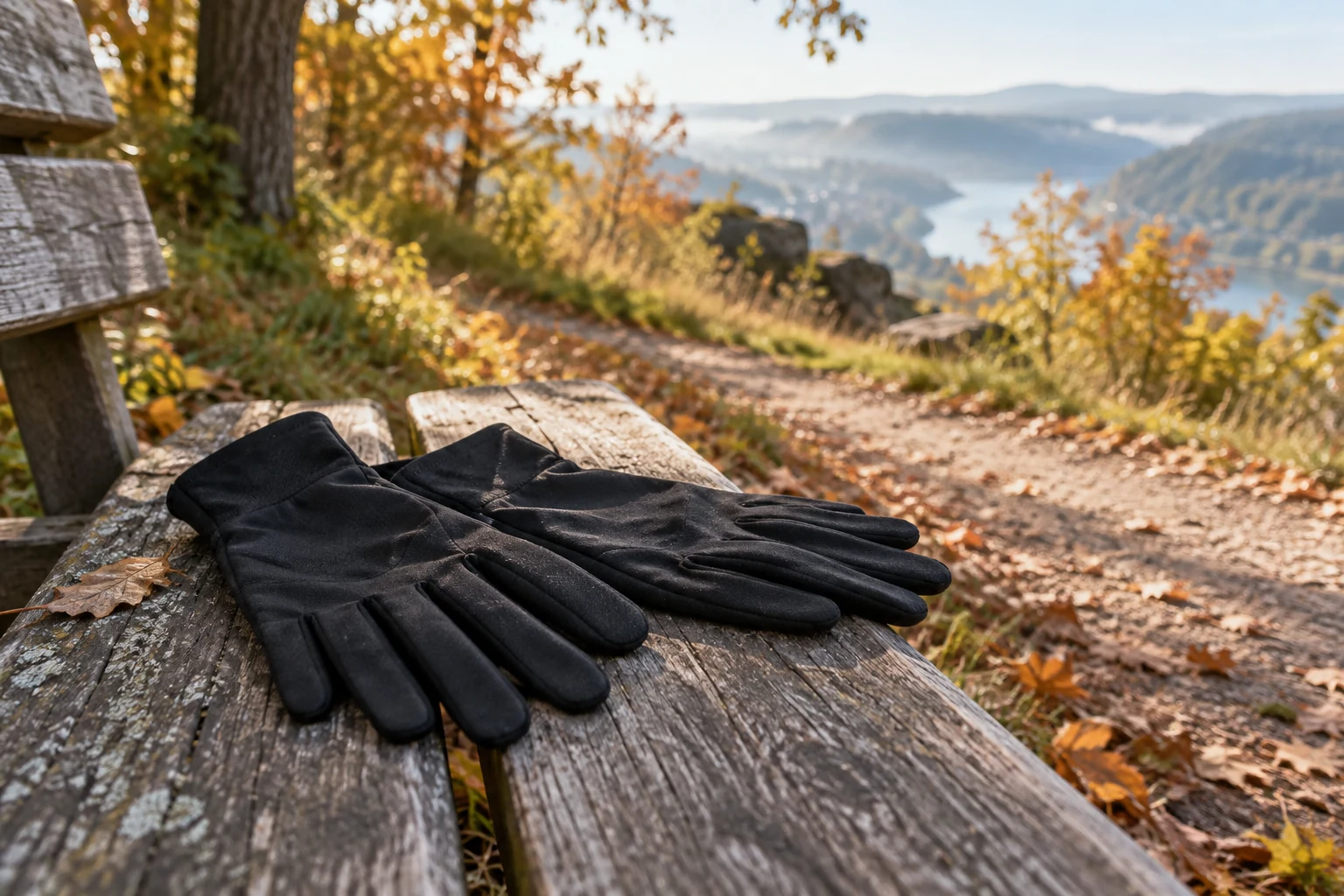
Gloves may come out in the morning and return to the pack later. Straightforward dressing and a clear storage place help this use. A lightweight model is not automatically suitable for every cold condition. Select from its intended application and the forecast rather than only a low weight figure.
Assess fingers in motion
Put both gloves on and position every finger. Open and close your hands, hold a harmless object and notice excessive fabric at the tips. Equally, adequate room should not depend on keeping the hand completely open.
Check the thumb while gripping. A model may fit the other fingers yet pull there. Compare another cut when uncertain rather than continually increasing size. Sizing across brands is not necessarily identical.
Try any advertised touchscreen function on your device. Black Diamond describes conductive material areas in particular lightweight liners. This belongs to the specific model rather than every thin glove. Do not plan access to important information solely from a packaging symbol.
Operate your actual closures
Open a jacket zip and fasten a pack buckle using your own equipment. A large handle on a demonstration object says little about reaching your jacket's small slider.
Check the sleeve transition. Does the glove cuff go beneath or over it, and can the combination move without continual adjustment? A bulky folded edge should not accidentally gather beneath a tight jacket cuff.
If removing gloves for a task, put them somewhere identifiable. One loose glove on a bench is easy to forget. A shared assigned compartment makes checking that both are packed simpler.
Inspect both after use
Care for and dry the gloves according to their label. Check finger areas and seams before returning them to the pack.
Decide again for the next outing whether the lightweight pair is sufficient or another suitable arrangement is needed. Manageability on one cool morning does not promise suitability for every later condition. Keep selection tied to the actual use and weather.