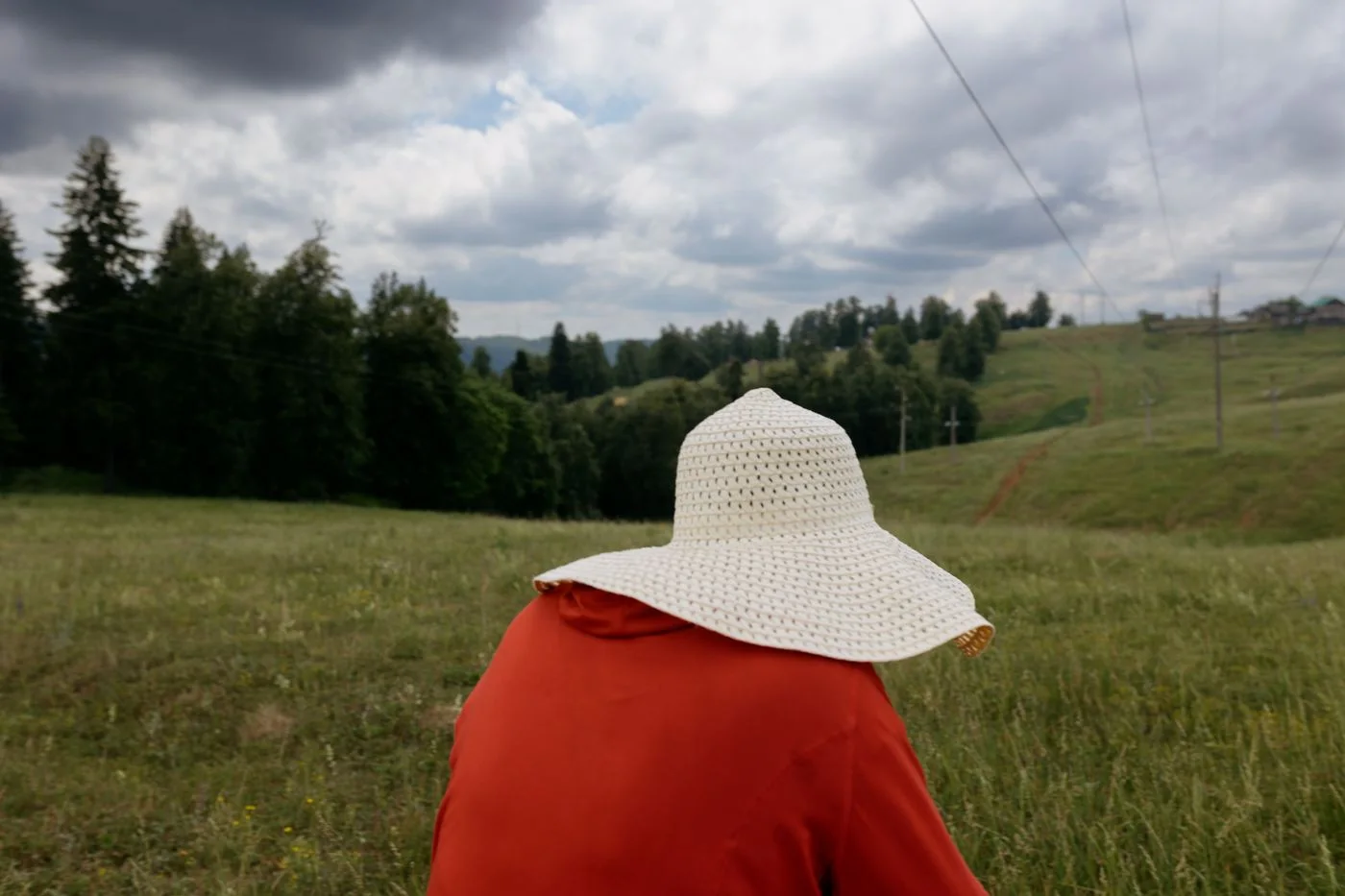
Do not wait until the exposed section to put headwear on for the first time. A hat that fits while standing in a shop may sit differently when looking down or sideways. Compare its shape in motion and with the clothing you will actually wear.
Fit the circumference before relying on a cord
Use the model's size chart and try its intended adjustment. A chin cord should not do the entire job of fitting an oversized hat. If the hat continually tips without it, assess size and shape first. Outdoor Research describes both internal adjustment and removable cords on particular models; these functions deserve separate consideration.
Position the hat as instructed. Turn and incline your head without holding it with one hand. Notice an uncomfortable band or seam. Assess a cap through the same observations even though it has less brim area.
Include the brim in movement checks
Look left and right, then down at the path ahead of your feet. The brim should not unexpectedly tip into your view. A softer shape may shift, so inspect the actual model rather than assuming wider always means better.
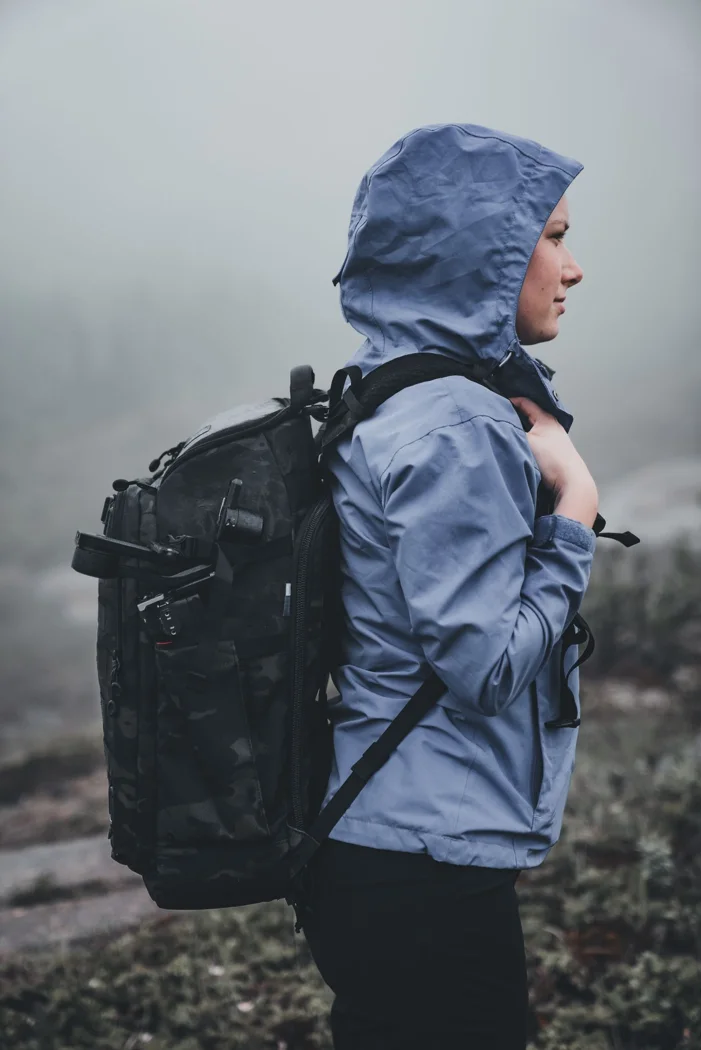
Put your daypack on and repeat. A high collar, hat underneath or raised hood changes the combination. If you intend to wear the headwear beneath a rain hood, try that arrangement too.
Choosing a cap or hat therefore involves other garments as well. Something comfortable without a hood may be awkward beneath one. You need not use every possible combination, but should understand the planned one.
Arrange retention and storage
Operate cords and other intended retainers according to the instructions. Avoid improvised attachment to arbitrary pack components. When removed, the item needs an accessible place where it cannot disappear unnoticed.
Check whether folding or rolling is permitted. A firm brim should not simply be squeezed as tightly as possible into a little compartment. Use the intended packing method and inspect its shape before the next outing.
In strong wind, headwear is one small equipment question within the whole route decision. A secure hat says nothing about whether an exposed section suits the actual conditions. Consider route and forecast independently of it.