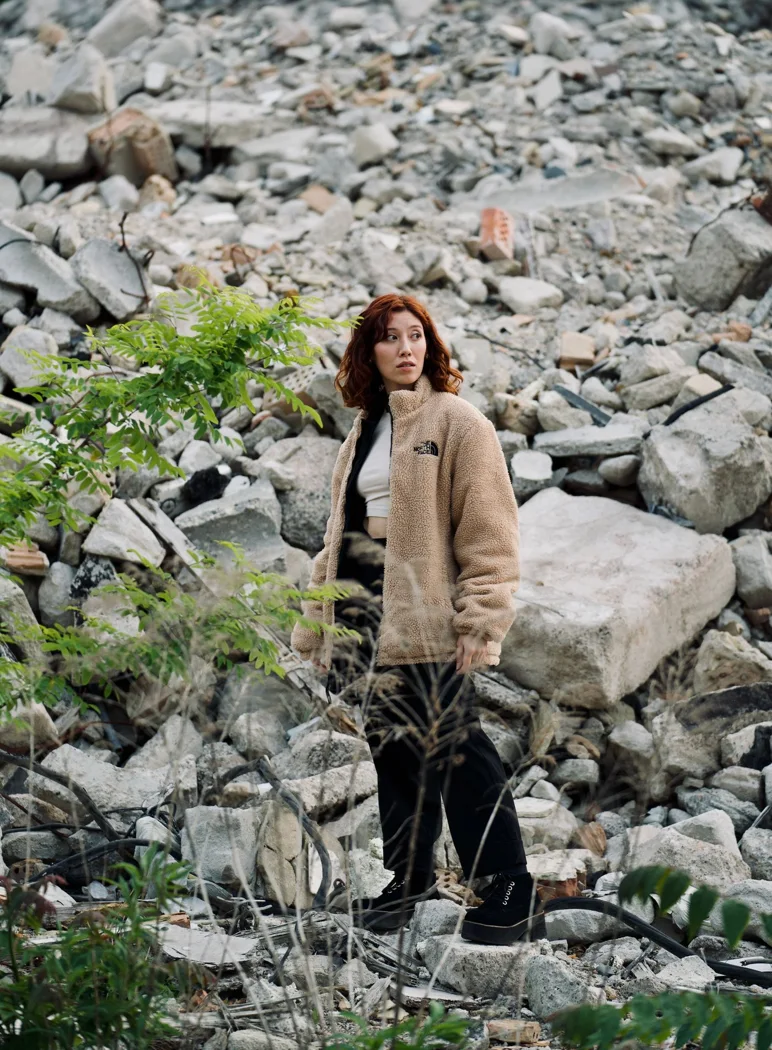
Fleece jacket covers both light midlayers and much more substantial garments. Choosing only by a pleasant surface can obscure its later role in your pack or layering arrangement. Ask when it will be worn first. A layer for active walking need not prioritize the same things as one for extended stops.
Define the role before the thickness
Decide whether the jacket will stay on often while moving or mainly wait for breaks. Perhaps you already have a suitable stop layer and want a lighter addition. The new piece then does not need to duplicate the same role. Examine the clothing you own before selecting the thickest available option.
VAUDE describes fleece as an insulating layer that can combine with windproof or waterproof outerwear. The fleece label does not establish complete weather protection. Read the actual model description where a particular wind-resistant construction is offered.
Compare candidates over the same intended clothing. A thin shirt beneath one and an already warm top beneath another distorts the impression. Size also affects how the fleece sits beneath an additional layer.
Make the zip and collar manageable
A full zip allows the garment to open completely or come off more easily. A short opening may suit your use but requires different handling. Actually try taking it on and off. A pleasant first touch cannot answer this question.
Fasten the collar and move your head. Does its edge accommodate the intended shirt underneath? Then add the outer jacket and assess both closures together. Two tall collars may gather at the same location.
Use the pockets while wearing your daypack. A pocket beneath a closed hip belt is not necessarily usable just because it was accessible without luggage. Decide whether you intend to store anything there while walking or whether a simpler design is sufficient.
Check movement beneath the outer layer
Raise your arms and reach forward with the planned layers on. Notice pulling at shoulders and elbows. If the shell fits only over a thin shirt, it may not accommodate the thicker fleece you are considering.
Check the hem while sitting. It should not lie beneath a pack belt in a way requiring constant correction. A longer back may be desirable, but additional length does not improve every arrangement.
When between sizes, do not choose from a standing image alone. The appropriate size permits intended movements and fits the other layers. An oversized garment that gathers fabric everywhere does not necessarily solve restricted movement.
Take its packing role seriously too
If carried mainly for stops, try it in the intended packing arrangement. Can you reach it quickly, or is it buried beneath things that must come out first? Keep the layer apart from damp belongings. No particular pouch shape is mandatory; actual separation matters.
After the first walks, reassess whether its role was chosen accurately. A fleece that stays too warm during movement or is always needed beneath another layer may still be useful. That observation shows its role differs from the original expectation. Adjust the combination rather than deriving use solely from the product name.